Route routine pumping, urgent observations, inspections, repairs, and system projects with the property, access, safety, records, and exact confirmation state crews need.
Routine pumping, alarms, property-transfer inspections, repairs, and new systems need different workflows.
Pumping and maintenance
Route routine pumping, first-time service, recurring maintenance, filter or component service, commercial pumping, and other supported work by property, system as known, prior service, occupancy or use, access, disposal scope, and confirmation rules.
Inspection and real-estate context
Separate maintenance inspections, sale or transfer, lender, authority, permit, complaint, system-location, camera, test, certification, and other actually supported paths with precise report, sampling, excavation, access, and approval boundaries.
Urgent observations and repair
Collect backup, slow drains, alarm, odor, noise, wet or soft areas, surfacing liquid, visible damage, pump or aerator observations, event timing, and prior actions without diagnosing cause, safe access, system condition, or repair from a form.
New, replacement, and drainfield
Give owners, builders, designers, soil or site professionals, installers, and authorities a path for plans, property and site context, water source, tests, permits, design responsibility, access, excavation, utilities, sequencing, and approvals.
Commercial and managed systems
Route restaurants, hospitality, multifamily, institutional, industrial, agricultural, grease or wastewater, and other supported work by system and waste stream, schedules, manifests or records, occupied operations, access, safety, compliance, and decision-makers.
Show real work, current credentials, safe access, and actual scheduling capability.
Real work with system context
Connect approved images to property and system context, company role, actual service or installation, access, excavation, equipment, constraints, disposal or documentation where relevant, and truthful status. Do not expose private records or imply buried conditions from generic images.
Verified qualifications and authority context
Publish licenses, insurance, certifications, authority or health-department credentials, inspection authorization, disposal or hauling permissions, product relationships, warranties, reviews, awards, and years only when current and accurately scoped.
Property and safety before arrival
Use clear instructions based on actual operations for lids or risers, gates, driveways, hoses, overhead and underground utilities, landscaping, pets, occupants, sewage exposure, and unsafe areas. Never direct unqualified entry into tanks or confined spaces.
Real territory and scheduling capability
State genuine counties or service areas, property and system fit, emergency or after-hours capability, truck or hose access limits, minimums, weather or ground constraints, disposal routes, lead times, and booking rules only from current operations.
Collect service, system, access, safety, and record context before dispatch.
1Routine or overdue pumping, urgent observation, maintenance, inspection or real estate, repair, locating, component service, new or replacement system, drainfield, commercial, managed property, or another supported request
2Property type and location, occupancy or use, bedrooms or usage context as applicable, water source, known system age, tank count, material, capacity estimate, lids or risers, pumps, alarms, aeration, filters, distribution, drainfield, and prior records as known—not verified system data
3Backup location, slow drains, alarm state, odor location, sound, wet or soft area, surfacing liquid, visible damage, pump or power event, weather, high-use event, first noticed, recurring or active now, and prior actions as observations—not diagnosis
4Tank or component location as known, distance and route from truck parking, driveway width and surface, gates, slopes, soft ground, landscaping, fences, overhead clearance, underground utilities, structures, water, wells, pets, occupants, tenants, and permission to access
5Safety confirmation that no one will enter a tank or confined space; exposed sewage, open lids, unstable ground, electrical hazards, and unsafe areas are kept away from people and pets and handled according to verified company and authority instructions
6Approved photos, rough site sketch, service and pumping history, receipts, inspection or test reports, plans, permits, authority records, warranty, property-transfer documents, and other files through a consent, privacy, retention, and qualified-review workflow
The customer provides service type, property and system context as known, observations, access, urgency, location, photos, records, and contact details.
02
Review and confirm
The company checks territory, service and system fit, current urgency, access and safety, truck or equipment needs, information gaps, authority context, capacity, and confirms the next step separately.
03
Access and assess
Qualified personnel locate and safely access supported components, review actual conditions, service history, alarms or equipment, site and drainfield context, records, and inspection or testing requirements.
04
Service or document findings
Pumping, cleaning, inspection, testing, locating, maintenance, or other authorized work is recorded with limitations, disposal or documentation, observed conditions, findings within scope, and further needs.
05
Propose and approve
Repair, design, soil or site work, replacement, products, quantities, excavation, utilities, permits, price, schedule, warranty, and responsibilities are documented and authorized separately.
06
Install and close
Protection, excavation, discovered conditions, changes, installation or repair, testing and authority inspection actually required, restoration limits, cleanup, records, payment, maintenance, and warranty handoff match operations.
Original BLUEROCK concept
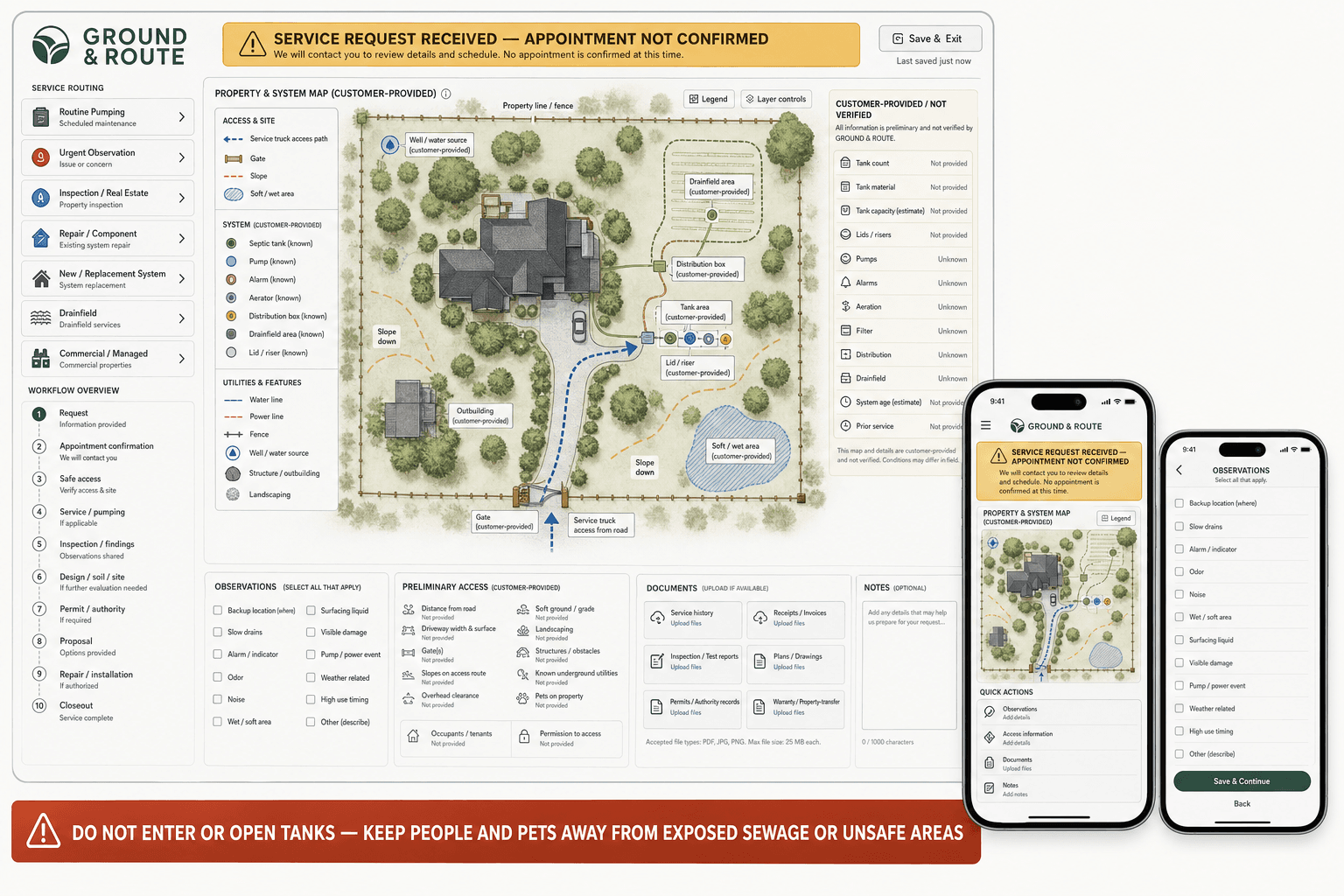
Ground & Route turns preliminary site knowledge into a safer service request.
See a fictional interface for service routing, a customer-provided property and system map, observations, truck access, documents, responsibilities, and an unmistakable “appointment not confirmed” state.
Fictional design study—not a real company, customer, property, system, diagnosis, design, permit, appointment, service, warranty, or result.
What pages should a septic company website include?
Most need a focused homepage, genuine pumping, inspection, repair, maintenance, installation or replacement, drainfield, component, commercial, and emergency pages where supported, truthful service areas, approved work, verified qualifications, process, service requests, and contact details. Grease, sewer, portable sanitation, financing, warranty, or county pages should exist only when accurate.
How should urgent septic observations be handled online?
Collect only the information needed to route the request and give safety instructions that match the company’s verified process. Do not diagnose the cause or encourage opening, entering, touching, or working around a tank, exposed sewage, electrical equipment, unstable soil, or confined space. Clearly distinguish request receipt from dispatch or appointment confirmation.
Can the website schedule pumping instantly?
Only if the company has a live, accurate scheduling system and the request inputs cover territory, service type, access, tank or component location, equipment requirements, urgency, weather or ground limits, and current capacity. Otherwise use request received and confirm the appointment separately.
Can a form design or price a replacement septic system?
No. Design and price may depend on site and soil evaluation, property and water-source setbacks, use, tests, existing system, topography, access, authority requirements, licensed roles, plans, products, excavation, utilities, permits, inspections, and restoration.
Will a septic company website guarantee leads or rankings?
No. It can improve technical access, local and county relevance, service clarity, verified evidence, mobile contact, and request quality. Competition, proximity, reputation, season, capacity, pricing, promotion, and follow-up also affect results.