Route by service intent
Routine pumping, urgent observations, inspections, component work, replacement systems, drainfields, and managed properties begin as different requests instead of one ambiguous form.
Fictional concept · Design study
An original responsive service-request direction that organizes service intent, preliminary property and system context, observations, safe truck access, records, and responsibilities before an appointment is confirmed.
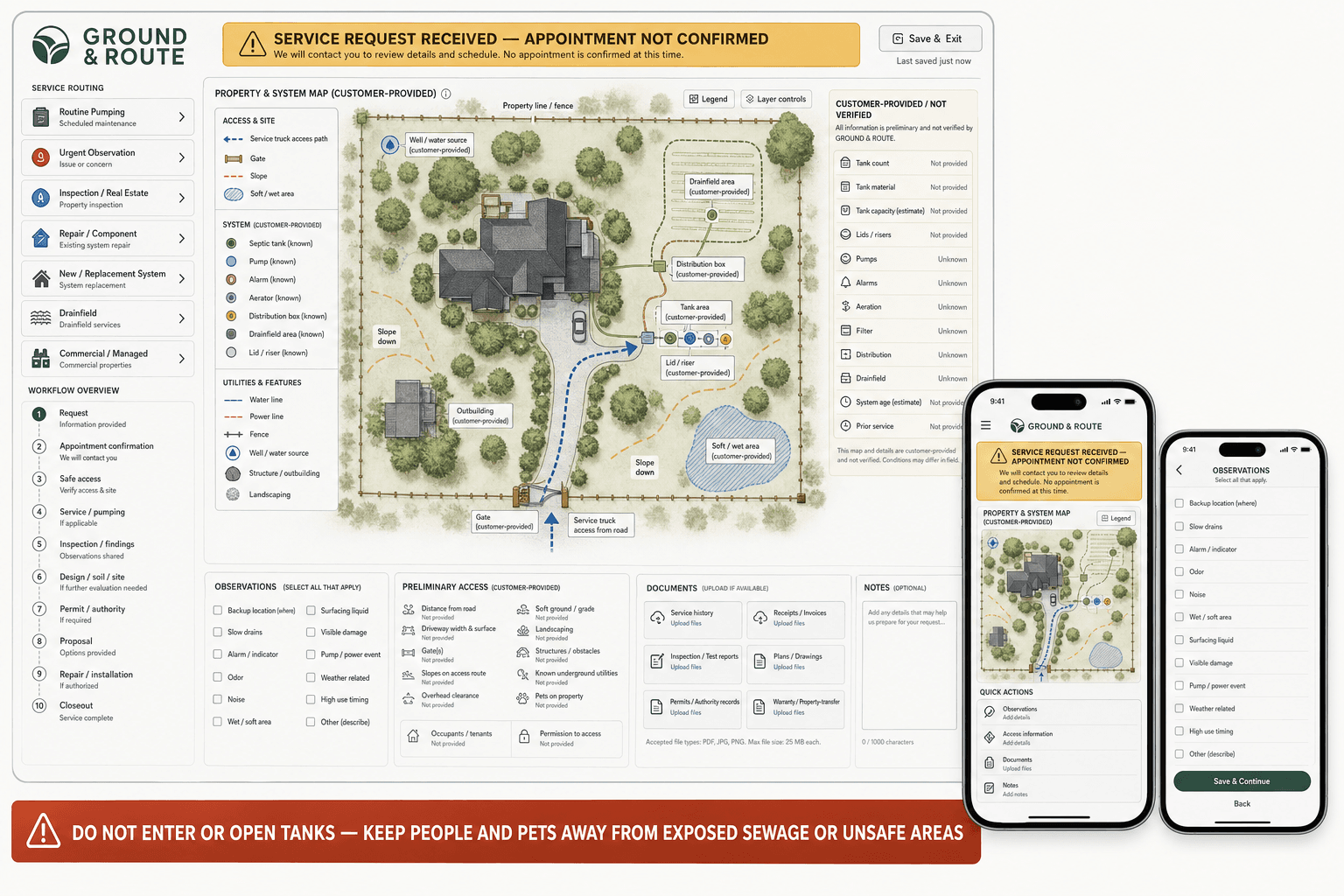
Ground & Route is a fictional brand created by BLUEROCK. This is not client work. The company, customer, property, system, tank, components, capacity estimates, map, access route, observations, records, interface, and states are illustrative design material. Nothing shown establishes a real diagnosis, condition, system location, capacity, soil or site conclusion, design, product, permit, authority approval, license, insurance, price, appointment, service, disposal record, repair, installation, test, warranty, environmental claim, compliance status, guarantee, or business result.
Design question
The concept turns customer knowledge into reviewable context while keeping tank details, symptoms, access, appointment, findings, design, authority decisions, price, and field work in their correct states.
Routine pumping, urgent observations, inspections, component work, replacement systems, drainfields, and managed properties begin as different requests instead of one ambiguous form.
The customer can sketch the house, truck route, gates, slopes, soft ground, landscaping, structures, utilities, water source, and system locations only as known.
Tank count, material, capacity estimate, lids, risers, pumps, alarms, aeration, distribution, drainfield, age, and prior service remain customer-provided—not confirmed facts.
Driveway surface and width, distance, clearance, gates, grades, obstacles, pets, occupants, tenants, and permission are visible before the company confirms equipment or attendance.
The interface tells people not to enter or open tanks and to keep people and pets away from exposed sewage or unsafe areas; it never substitutes a form for emergency or qualified guidance.
History, receipts, reports, plans, permits, authority records, and property documents support review while request, service, findings, design, approval, installation, and closeout remain separate states.
Interaction architecture
Start with routine pumping, an urgent observation, inspection or real-estate context, repair or component work, new or replacement system, drainfield, or commercial and managed service.
Sketch the site, possible truck route, gates, grades, soft areas, landscaping, structures, water source, utilities, occupants, pets, and permission as preliminary context.
Record only customer-provided system details and observations without converting estimates, symptoms, records, or map positions into verified condition or diagnosis.
Confirm safe boundaries and upload approved photos, history, reports, plans, permits, authority records, and property-transfer documents for qualified review.
Show “service request received” without fabricating an appointment, dispatch, quote, diagnosis, scope, product, capacity, design, permit, or completed work.
The real company verifies service fit, access, safety, timing, system information, qualified roles, findings, proposal, authorization, permits, service or installation, testing, records, and closeout.
From concept to production
A production site should reflect the company’s actual territory, equipment and access limits, supported systems, qualified roles, authority relationships, scheduling, inspection and reporting practices, disposal documentation, products, warranties, and approved project evidence.
See the BLUEROCK approach to clear service routing, preliminary property context, safe access, verified evidence, qualified workflows, and honest appointment status.
Explore Septic Service Web Design