What pages should a basement waterproofing website include?
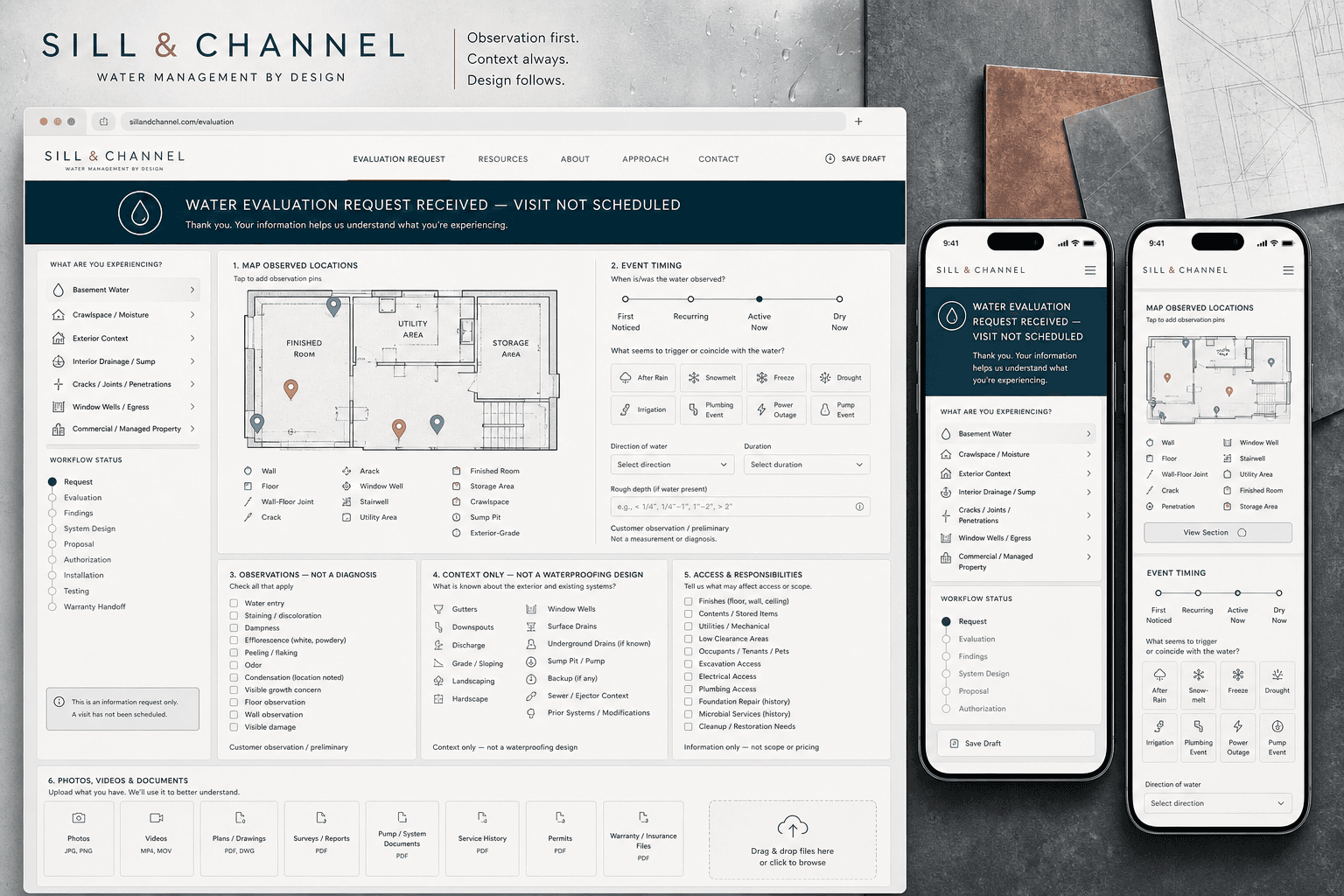
Most need a focused homepage, genuine basement, crawlspace, exterior, drainage, sump, crack or penetration, and commercial pages where supported, truthful service areas, approved projects, verified systems and qualifications, process, evaluation requests, and contact details. Mold, structural, plumbing, financing, warranty, emergency, or location pages should exist only when accurate.
How should water-entry symptoms be explained?
Describe location, timing, weather or event context, duration, direction, and visible observations calmly. Do not claim the source, pressure condition, structural implication, microbial condition, health risk, or correct system from photos or a checklist. Direct the visitor to the appropriate qualified evaluation.
Can a website promise a permanently dry basement?
Avoid universal promises. Any performance or warranty language should match the actual evaluated condition, documented system and scope, product requirements, exclusions, maintenance, power and pump dependencies, discharge conditions, transfer rules, limits, and current written warranty.
Can the site provide an instant waterproofing quote?
Not responsibly for most projects. Scope and price can depend on evaluation, water location and event history, finishes and contents, foundation and drainage context, excavation, access, utilities, existing systems, structural or microbial concerns, plumbing or electrical coordination, products, permits, restoration, and discovered conditions.
Will a new waterproofing website guarantee leads or rankings?
No. It can improve technical access, local relevance, service clarity, verified evidence, mobile contact, and inquiry quality. Competition, proximity, reputation, weather, capacity, pricing, promotion, and follow-up also affect results.