What pages should a paving contractor website include?
Most need a focused homepage, genuine residential and commercial service pages, accurate territory, approved project galleries, verified capability, process, estimate or bid requests, and contact details. Driveway, parking lot, road, milling, repair, sealcoating, striping, concrete, paver, civil, municipal, financing, maintenance, and location pages should exist only when supported.
How should paving projects be presented online?
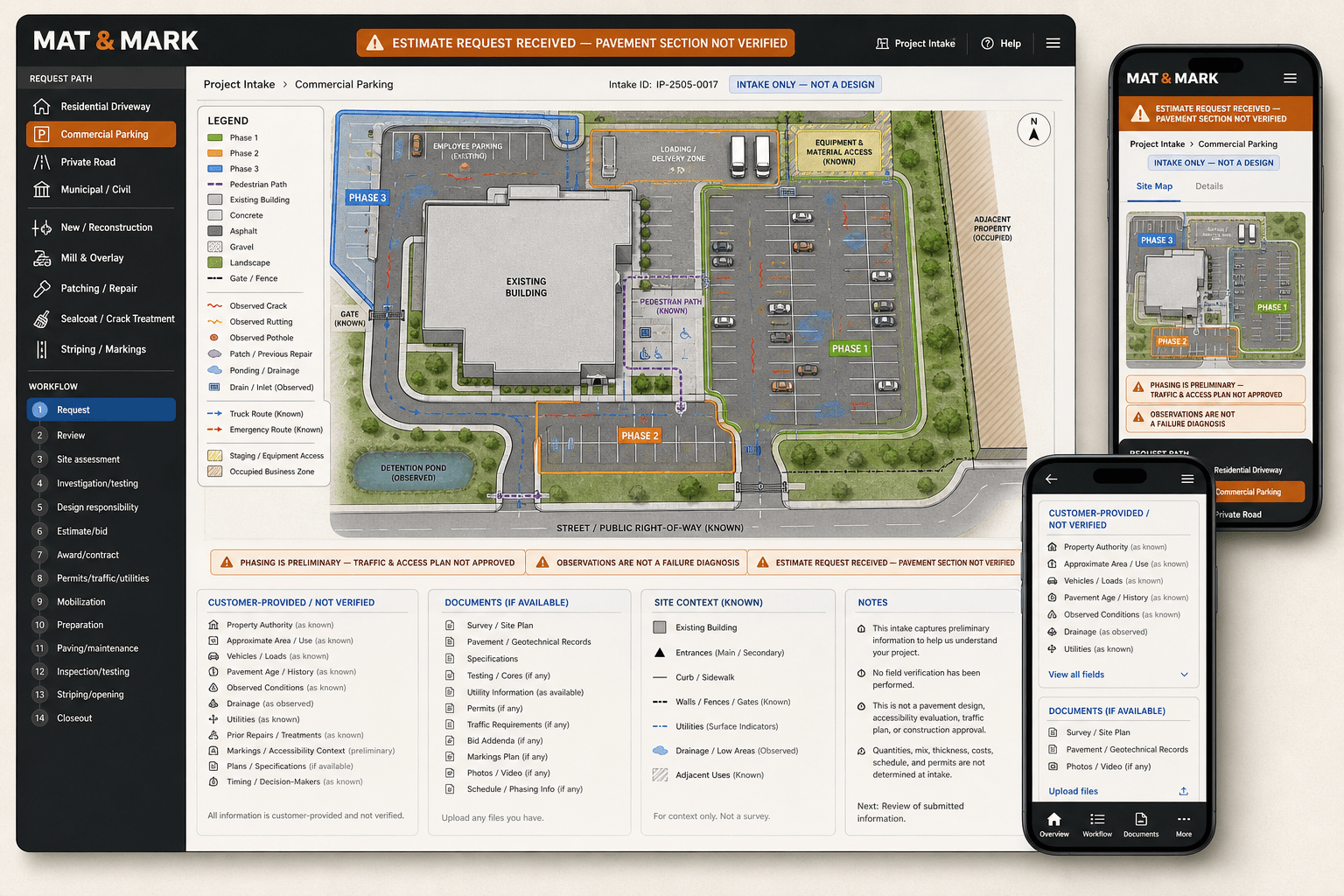
Organize approved work by buyer and property type, service, company role, preparation, material or section only when verified, drainage, site constraints, phasing, traffic, markings, testing, and status. Do not present stock images, concepts, unrelated work, or a finished surface without meaningful context as proof.
Can a paving website calculate an instant quote?
A preliminary range is possible only with an approved model and clear assumptions. Final scope may depend on area, use and loads, existing pavement, base and subgrade, drainage, elevations, demolition, milling, access, trucking, material and plant context, thickness, mix, compaction, edges, markings, traffic, phasing, permits, testing, season, and schedule.
Can photos determine why pavement failed?
No. Photos can document visible cracking, rutting, settlement, heaving, raveling, potholes, ponding, or prior repairs, but they do not establish hidden section, base, subgrade, drainage, utilities, loads, materials, construction history, movement, or the correct repair.
Will a paving website guarantee jobs or rankings?
No. It can improve technical access, service clarity, local relevance, real evidence, mobile contact, and request quality. Competition, procurement, proximity, reputation, season, weather, material availability, capacity, pricing, promotion, and follow-up also affect outcomes.