BLUEROCK

Roofline · flow · discharge · honest status

Web Design for Gutter Companies

Help property owners choose the right supported service, see real work, and prepare a qualified assessment without turning overflow photos into a diagnosis, instant quote, or scheduled job.

Start Your Website

First-screen routing

  1. 01 · Install, repair, or maintain?
  2. 02 · Which rooflines?
  3. 03 · Where do downspouts discharge?
  4. 04 · What is observed?
  5. 05 · Request received or assessment scheduled?

New gutters, one leaking section, seasonal cleaning, guards, and managed properties need different paths.

Installation and replacement

Route whole-home, addition, detached structure, section, historic, multifamily, and other supported work by property, roofline, stories, eaves, fascia context, approximate runs, downspouts, discharge, material direction, access, and decision-makers.

Repair and urgent observations

Separate leaks, loose or sagging sections, separation, damaged components, overflow, downspout issues, storm observations, and other supported repair paths without diagnosing cause, hidden condition, capacity, or safe repair from a form.

Cleaning, guards, and maintenance

Explain genuinely offered cleaning, inspection, recurring service, guard or cover systems, flushing, minor service, and seasonal work with property fit, exclusions, access, debris handling, and confirmation rules.

Commercial and managed property

Give property managers, associations, facilities, retail, hospitality, institutional, multifamily, and other supported buyers a path for plans, roof drainage context, occupied work, access, safety coordination, documentation, and approvals.

Show the whole water path without making an engineering promise.

Projects with water-path context

Connect approved images to the property, roofline or elevation, gutter and downspout scope, discharge context, company role, access, constraints, and truthful status. Do not present product images or concepts as installed work.

System—not isolated product

Explain the supported relationship among roof edge, eaves, fascia, soffit, flashing, gutters, outlets, downspouts, extensions, underground connections, grade, and landscape without making engineering or drainage conclusions.

Verified product and company proof

Publish licenses, insurance, certifications, manufacturer relationships, product specifications, capacities, warranties, reviews, awards, years, financing, and performance language only when current, approved, and accurately scoped.

Real territory and operating fit

State genuine service areas, property and project fit, height or access limits, minimums, season, weather rules, debris handling, product access, lead times, and scheduling only from current operations.

Collect roofline, downspout, discharge, and access context before defining work.

  • 1Installation, replacement, repair, cleaning, maintenance, guard or cover, downspout or discharge, storm, commercial, managed property, or another supported request
  • 2Property type and approximate age, stories, roof and eave context as known, affected front, rear, side, garage, porch, addition, detached structure, valley, corner, or other areas
  • 3Existing gutter material, profile, color, guards, approximate runs, outlets, downspouts, extensions, underground connections, and prior work as known—not final measurements or specifications
  • 4Overflow location, visible leaks or separation, sagging, staining, pooling, erosion, icing, debris, vegetation, damage, interior or foundation observations, and event timing as observations—not diagnosis
  • 5Roof, fascia, soffit, siding, windows, decks, landscaping, grade, utilities, service lines, neighboring property, ladders or lift access, occupied areas, pets, tenants, and protection constraints
  • 6Approved photos, rough dimensions, plans, reports, association or historic rules, insurance context, product references, and other documents through a consent, privacy, retention, and qualified-review workflow

Keep inquiry, assessment, scope, product selection, authorization, and service distinct.

  1. 01

    Request

    The customer provides service type, property and roofline context, observations, access, timing, location, photos, documents, and contact details.

  2. 02

    Review

    The company checks service and territory fit, capacity, height and access, information gaps, supported products, urgency, decision-makers, and the proper next step.

  3. 03

    Assess

    Qualified review examines actual runs, measurements, pitch and roof-water context, outlets, downspouts, discharge, accessible attachment and edge conditions, safety, and documentation.

  4. 04

    Define scope

    Supported cleaning, removal, repair, installation, guards, downspouts, discharge work, assumptions, exclusions, price, product availability, schedule, warranty, and responsibilities are documented.

  5. 05

    Approve and coordinate

    The correct parties accept terms; selections, deposit, documents, access, product order, weather requirements, and work timing are confirmed separately.

  6. 06

    Perform and close

    Protection, cleaning or removal, discovered conditions, changes, installation or service, testing used by the company, cleanup, documentation, payment, care, warranty information, and follow-up match actual operations.

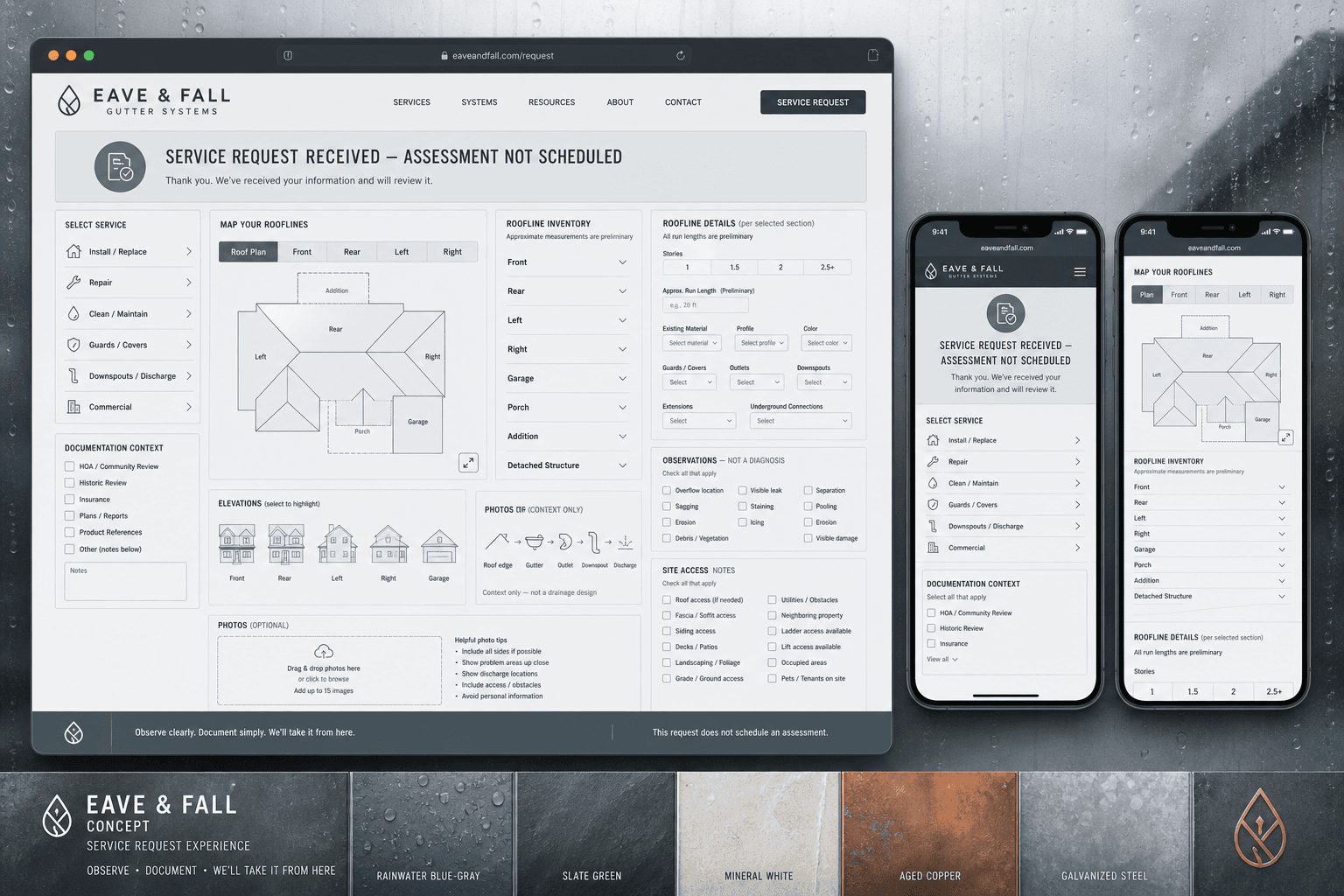
Eave and Fall fictional gutter company website concept

Original fictional concept

Eave & Fall

See how roofline mapping, downspout and discharge context, preliminary runs, observations, access, photos, and documents can prepare an assessment request without implying diagnosis, drainage design, scope, price, or schedule.

Fictional brand and interface created by BLUEROCK—not client work or a real company, property, system, assessment, service, installation, or result.

View the Concept

Gutter company website questions

What pages should a gutter company website include?

Most need a focused homepage, genuine installation, repair, cleaning, guard, downspout, and commercial pages where supported, truthful service areas, approved projects, process, assessment or quote requests, and contact details. Storm, historic, financing, warranty, maintenance-plan, product, or location pages should exist only when accurate.

How should gutter projects and products be presented?

Separate approved completed work from manufacturer images, samples, visualization, and fictional concepts. Identify property and roofline context, company role, gutter and downspout scope, access, and constraints accurately. Use product compatibility, capacity, finish, testing, and warranty information only from approved current documentation.

Can photos provide an instant gutter quote?

They may help triage a request, but scope and price can depend on field measurements, roofline geometry, stories, access, removal, fascia or edge conditions, outlets, downspouts, discharge, underground connections, product selection, equipment, weather, and discovered conditions.

Should the website diagnose overflow or drainage problems?

No. It can collect where and when overflow, leaks, pooling, erosion, staining, or other observations occur and explain the company’s real assessment process. Cause, capacity, slope, hidden condition, drainage design, building condition, and remedy require appropriate qualified review.

Will a gutter company website guarantee leads or rankings?

No. It can improve technical access, local relevance, service clarity, project evidence, mobile contact, and inquiry quality. Competition, proximity, reputation, weather, season, capacity, pricing, promotion, and follow-up also affect results.
Build the website around supported services, real rooflines, honest observations, qualified assessment, and the company’s actual confirmation process.

Start Your Website