Systems and equipment
Separate sprinkler, alarm/detection, extinguisher, suppression, standpipe/hose, fire pump, backflow, monitoring, passive protection, and other paths only when the company actually provides them.
Systems · records · verified status
Help facility teams and project buyers identify the system, service event, building context, records, deadline, and responsible next step without turning a request into an inspection result, compliance decision, appointment, or emergency dispatch.
Start Your WebsiteFirst-screen routing
Separate sprinkler, alarm/detection, extinguisher, suppression, standpipe/hose, fire pump, backflow, monitoring, passive protection, and other paths only when the company actually provides them.
Route new design/installation, tenant improvement, inspection, testing, maintenance, repair, recharge, replacement, deficiency correction, impairment support, monitoring, documentation, and emergency service according to real capability.
Give owners, facility teams, property managers, general contractors, engineers, institutions, commercial portfolios, industrial sites, multifamily properties, and other supported buyers the right qualification path.
Distinguish active fire or alarm emergencies that require emergency services from leaks, alarms, damaged equipment, shutdowns, impairments as reported, scheduled work, records, bids, and future projects. A web form is not emergency dispatch.
Publish licenses, certifications, registrations, manufacturer relationships, listings, training, insurance, union status, geographic authority, system capabilities, and personnel roles only from current correctly scoped evidence.
Approved examples should identify building and system context, the company role, actual inspection/testing/maintenance or installation scope, documents, limitations, status, and responsible parties without exposing security-sensitive system details.
Name codes, standards, editions, adopted requirements, AHJs, permits, listings, testing methods, intervals, and acceptance only when applicable and verified. A contractor website does not itself certify a building, system, or owner as compliant.
Separate office hours, phone answering, request intake, monitoring, technician availability, dispatch, arrival, emergency response, inspection scheduling, territory, system eligibility, account status, access, weather, and capacity.
Capture buyer, building, system, service event, observed status, urgency, contacts, access, records, deadline, and known authority or project context.
The company verifies territory, system and service fit, account or contract status, qualifications, technician and equipment capability, schedule, access, shutdown needs, and missing information.
A supported inspection, test, service visit, estimate, design review, bid step, or emergency response is separately confirmed. Receipt alone is not booking or dispatch.
Qualified personnel perform only authorized inspection, testing, maintenance, diagnosis, repair, survey, design support, installation, or other scope and document actual results and limitations.
Findings, impairment status, recommendations, options, proposal, responsibilities, interim measures, approvals, permits, shutdowns, price, schedule, parts, and change authorization remain explicit.
Work, retest, reports, tags, records, owner handoff, monitoring updates, AHJ or third-party inspection/acceptance, correction, warranty, billing, and closeout reflect real status—not an automatic website outcome.
Most need a focused homepage, exact system and service pages, commercial or specialty buyer paths where relevant, truthful territory and response information, verified qualifications, approved projects, inspection/testing/maintenance and installation workflows, records, emergency guidance, careers if active, and clear request forms.
Only when the exact claim is supportable for the applicable scope, adopted edition, jurisdiction, design, product, installation, inspection, testing, maintenance, records, and responsible roles. NFPA does not itself approve an installation, and AHJ or third-party decisions remain separate.
They can request one. System fit, territory, qualification, account status, records, access, shutdowns, responsible parties, deadlines, technician availability, price, and confirmation may still be required before an appointment exists.
Only what is necessary and through appropriate privacy and security controls. The site should avoid publicly exposing sensitive building, alarm, suppression, access, monitoring, occupant, or security information and should not turn uploaded material into a finding or approval.
No. It can improve technical access, service clarity, local relevance, proof, request quality, and buyer confidence. Competition, territory, qualifications, relationships, bid systems, reputation, capacity, pricing, promotion, and follow-up also affect results.
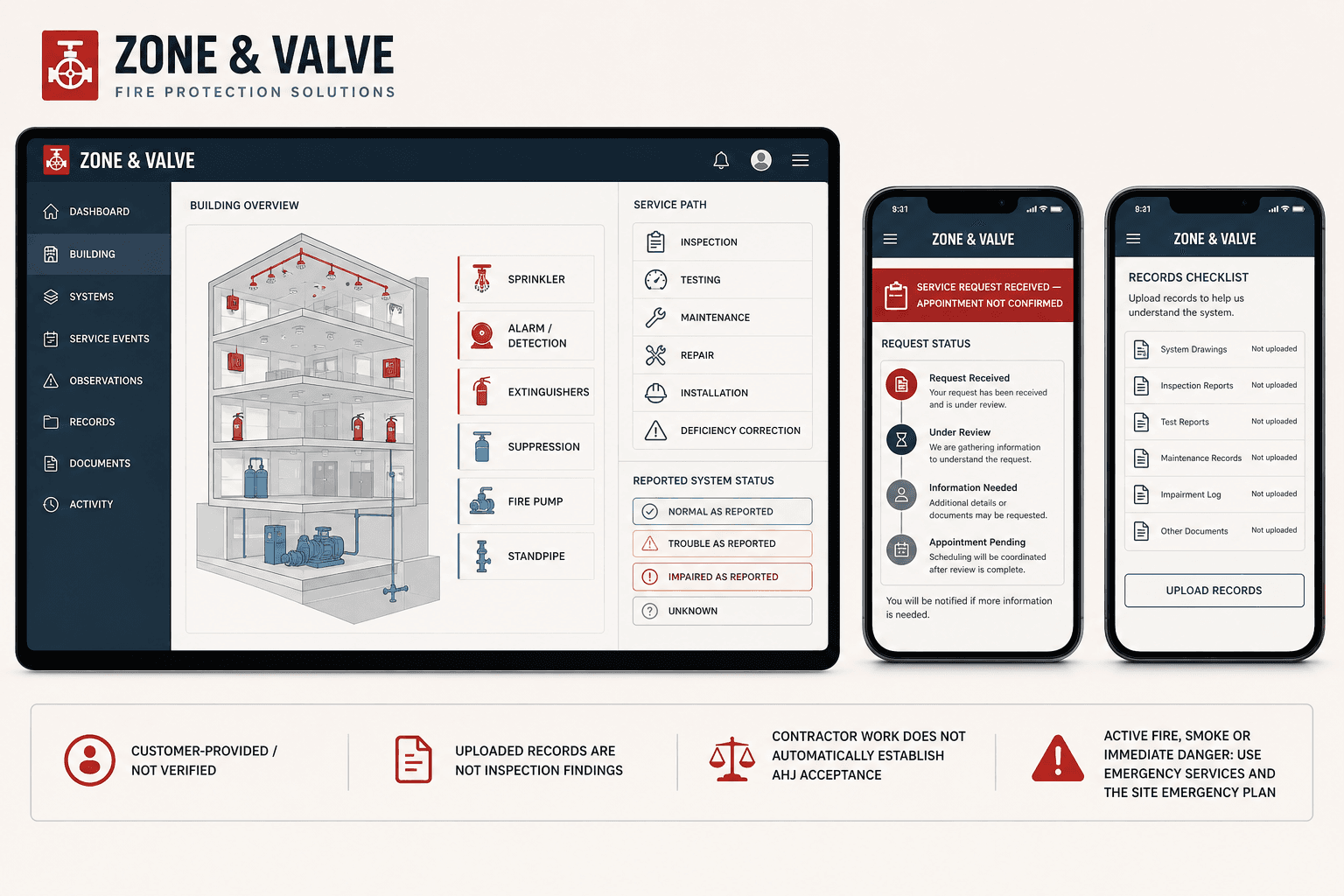
Original concept · Fictional brand
Zone & Valve shows how a facility buyer can identify systems, reported status, service intent, records, deficiencies, and operational context while preserving the line between intake, field findings, authorization, contractor completion, and AHJ acceptance.
View Zone & Valve Concept