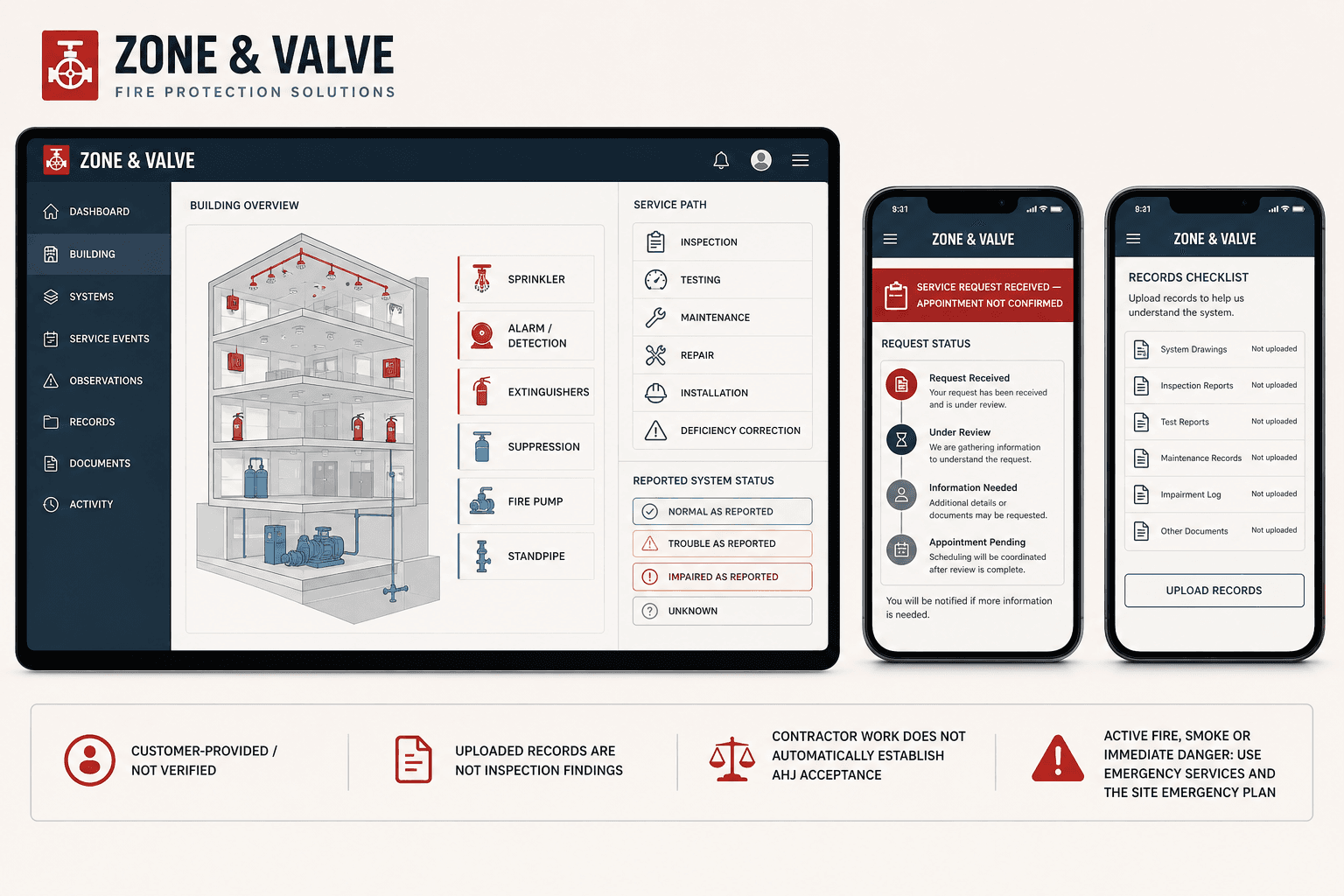
An original responsive service-request direction that organizes buildings, systems, reported status, service events, records, deficiencies, authorization, and external decisions without turning intake into inspection or approval.
Zone & Valve is a fictional brand created by BLUEROCK. This is not client work. The company, requester, building, occupancy/use, systems, equipment, zones, observations, reported status, records, deficiencies, dates, service paths, workflow, and decisions are illustrative. Nothing shown establishes design, installation, listing, monitoring, impairment, inspection or test result, maintenance condition, diagnosis, code or standard applicability, compliance, correction, operational readiness, emergency response, appointment, dispatch, technician availability, permit, certification, contractor qualification, owner acceptance, insurer decision, AHJ approval or acceptance, completed work, warranty, guarantee, or outcome.
Design question
How can system records support service qualification without becoming findings, compliance, or acceptance?
The concept makes building context, reported status, service intent, evidence, operational constraints, responsibilities, and workflow visible while reserving field findings and external decisions for the correct parties.
Start with building and buyer context
Owners, facility teams, property managers, contractors, engineers, institutions, portfolios, and specialty sites can identify the property, responsibility, access, deadline, and project state without exposing unnecessary security details.
Separate systems and service events
Sprinkler, alarm/detection, extinguishers, suppression, pumps, standpipes, inspection, testing, maintenance, repair, installation, and deficiency correction remain distinct and appear only when actually supported.
Label reported status as reported
Normal, trouble, impaired, out of service, active alarm, leak, damage, discharge, or unknown can guide follow-up but does not become diagnosis, inspection result, compliance finding, monitoring status, or emergency response.
Turn records into context—not findings
Drawings, reports, test and maintenance records, impairment logs, notices, deficiencies, permits, submittals, schedules, and photos prepare review but do not establish accuracy, applicability, correction, approval, or acceptance.
Preserve operational and authority states
Request, qualification, appointment, field work, finding, proposal, authorization, correction, retest, contractor completion, owner handoff, and AHJ or third-party decision are visible as separate states.
Interaction architecture
Reported status, qualification, appointment, field finding, authorization, correction, contractor completion, and AHJ acceptance are different states.
01
Identify the building
Capture requester authority, use/occupancy as known, access, critical operations, shutdown windows, responsible parties, deadlines, and secure-record needs.
02
Choose system and event
Select the supported system and inspection, testing, maintenance, repair, installation, deficiency, impairment, records, bid, or other real service path.
03
Describe observations
Add reported status, location/zone, known equipment, recent event, prior action, authority/building/monitoring contacts, and what remains unknown without self-inspection.
04
Share records securely
Provide only necessary drawings, reports, notices, service history, tags, schedules, photos, and identifiers through appropriate privacy and security controls.
05
Request a next step
Confirm receipt without manufacturing an appointment, dispatch, technician, emergency response, finding, price, parts, compliance, or approval.
06
Advance through verified states
The actual company qualifies and confirms work; responsible parties document findings and authorization; AHJ, insurer, owner, engineer, monitoring provider, or other third party makes its own decisions.
From concept to production
Replace every illustrative system, qualification, record, status, instruction, response, and authority workflow with verified operations.
A production site should reflect actual systems, territory, licenses, certifications, personnel roles, adopted requirements, service methods, inspection/testing/maintenance practice, emergency handling, monitoring relationships, data security, reporting, permits, AHJs, warranties, and approved work.
Need a website for your fire protection company?
See the BLUEROCK approach to exact systems, usable records, verified qualifications, responsible standards language, and honest service status.