Urgent routing · verified response · honest status
Web Design for Restoration Companies
Help stressed property owners describe what happened, reach the right response path, and understand the next state without confusing a help request with dispatch, safety assessment, coverage, mitigation, or reconstruction.
Water, fire, storm, environmental concerns, contents, commercial loss, mitigation, and reconstruction need different states.
Water events and moisture concerns
Route supply, appliance, roof/storm, groundwater, drainage, sewage only where qualified, unknown source, active or stopped flow, standing water, damp materials, affected levels and rooms, utilities, occupants, event timing, prior actions, and emergency/utility contact status as observations—not category, class, safety, or coverage.
Fire, smoke, soot, and odor context
Separate post-fire stabilization, board-up, smoke/soot/odor, contents, water from suppression, structural or electrical concerns, utility/fire-authority status, regulated materials, cleaning, demolition, reconstruction, and specialist roles without declaring entry, air, structure, contents, or occupancy safe.
Storm, environmental, and specialty paths
Give wind, hail, tree impact, freeze, flooding, microbial concern, indoor-environment concern, biohazard or trauma only when qualified, vandalism, vehicle impact, and other supported events exact emergency, safety, testing, environmental, privacy, authority, and service boundaries.
Commercial, managed, contents, and reconstruction
Route multifamily, retail, hospitality, healthcare, institutional, industrial, property-management, portfolio, contents and inventory, business interruption context, tenant communication, mitigation, repair/reconstruction, vendors, documentation, decision-makers, and phased reopening separately.
Trust comes from accurate availability, verified qualifications, private evidence, and honest insurance boundaries.
Real work with privacy and status
Use approved project evidence with property and event context, company role, documented actions, equipment or measurements only when verified, sequence, limitations, and truthful status. Remove personal, tenant, health, security, claim, policy, and sensitive-loss information.
Verified qualifications and capabilities
Publish licenses, insurance, certifications, training, firm status, environmental/biohazard capability, testing relationships, equipment, warranties, reviews, vendor networks, commercial capacity, and years only from current correctly scoped records.
Territory and availability that operations can honor
Distinguish phone answering, request intake, live triage, dispatch, arrival, emergency stabilization, office hours, after-hours, 24/7, response time, territory, travel, weather, crew capacity, and service eligibility. Never turn a submitted form into confirmed dispatch.
Documentation without claim promises
Explain photos, notes, measurements, inventories, estimates, scopes, invoices, communication and insurer coordination actually provided without implying affiliation, coverage, approval, deductible handling, settlement, payment, or reconstruction authorization.
Collect event, affected-area, safety, utility, occupant, access, and record context without asking the customer to diagnose.
1Water, fire/smoke, storm, sewage or biohazard only where qualified, microbial/indoor-environment concern, odor, contents, board-up/tarping, commercial loss, mitigation, cleaning, reconstruction, service/warranty, or another supported request
2Property type/location, owner/tenant/manager/authorized contact, occupancy, affected and unaffected areas as observed, event type and source/status as known, first noticed, active/stopped/unknown, weather or prior event, prior actions, and current contact availability
4Emergency services, utility, building management, authority, plumber/roofer/electrician, insurer/agent and other contacts already made; power, gas, water, fire alarm/sprinkler, HVAC, elevator, security, access and shutdown status only as known
5Occupants, children, older adults, people with health or mobility considerations, pets, tenants, employees and public access communicated carefully without collecting unnecessary medical details; no instructions to enter unsafe areas or handle contaminated materials
6Approved photos/video, floor sketch, inventories, prior reports, estimates, policy/claim identifiers only when necessary and securely handled, authority/utility records, invoices, leases, contacts, consent, retention and data-sharing controls
The customer provides authority, event and affected-area observations, active status as known, safety concerns, occupants, utilities, contacts, access, photos, records, location, and contact details.
02
Live review and confirmation
The company checks territory, service fit, urgency, hazards, current emergency/utility status, crew and equipment capability, information gaps, and separately confirms the supported next action or dispatch.
03
Assess and stabilize
Qualified personnel evaluate actual conditions, safety and access, source/status within role, affected materials, measurements, contents, utilities, emergency controls, documentation, and immediate authorized stabilization.
04
Document and mitigate
Approved extraction, removal, cleaning, drying or other mitigation is documented with readings or testing only where qualified, limitations, contents, waste, changes, communications, and further professional needs.
05
Scope and authorize
Testing, clearance, design, repair/reconstruction, products, quantities, estimates, insurance decisions, permits, price, schedule, responsibilities, and authorization remain explicit and separate.
06
Restore and close
Repairs or reconstruction, inspections, testing/clearance where required by qualified parties, contents, cleaning, records, payment, warranties, maintenance, and handoff match actual scope and status.
Restoration company website questions
What pages should a restoration company website include?
Most need a focused homepage, accurate urgent contact, genuine water, fire/smoke, storm, microbial or specialty pages only where qualified, commercial and contents paths, mitigation and reconstruction separated where offered, truthful territory, approved work, verified qualifications, process, help requests, and contact details.
Can the website advertise 24/7 emergency response?
Only when the company genuinely staffs and can honor the specific claim. Phone answering, intake, live review, dispatch, arrival, stabilization, office hours, territory, weather and capacity are different. The website must state the actual confirmation process.
Can photos determine damage category, safety, mold, or scope?
No. Photos can prepare follow-up but do not establish source, contamination, category/class, moisture extent, air quality, microbial condition, structural/electrical safety, salvageability, drying goals, testing, clearance, coverage, or repair scope.
Can the website say the company works with insurance?
It can accurately describe documentation and communication actually provided. It should not imply insurer affiliation, preferred status unless current and scoped, coverage, claim approval, estimate acceptance, deductible waiver, settlement, payment, or guaranteed reconstruction authorization.
Will a restoration website guarantee emergency leads or rankings?
No. It can improve technical access, mobile contact, service clarity, local relevance, verified trust, and request quality. Competition, proximity, reputation, event volume, weather, capacity, availability, pricing, insurer/vendor relationships, promotion, and follow-up also affect outcomes.
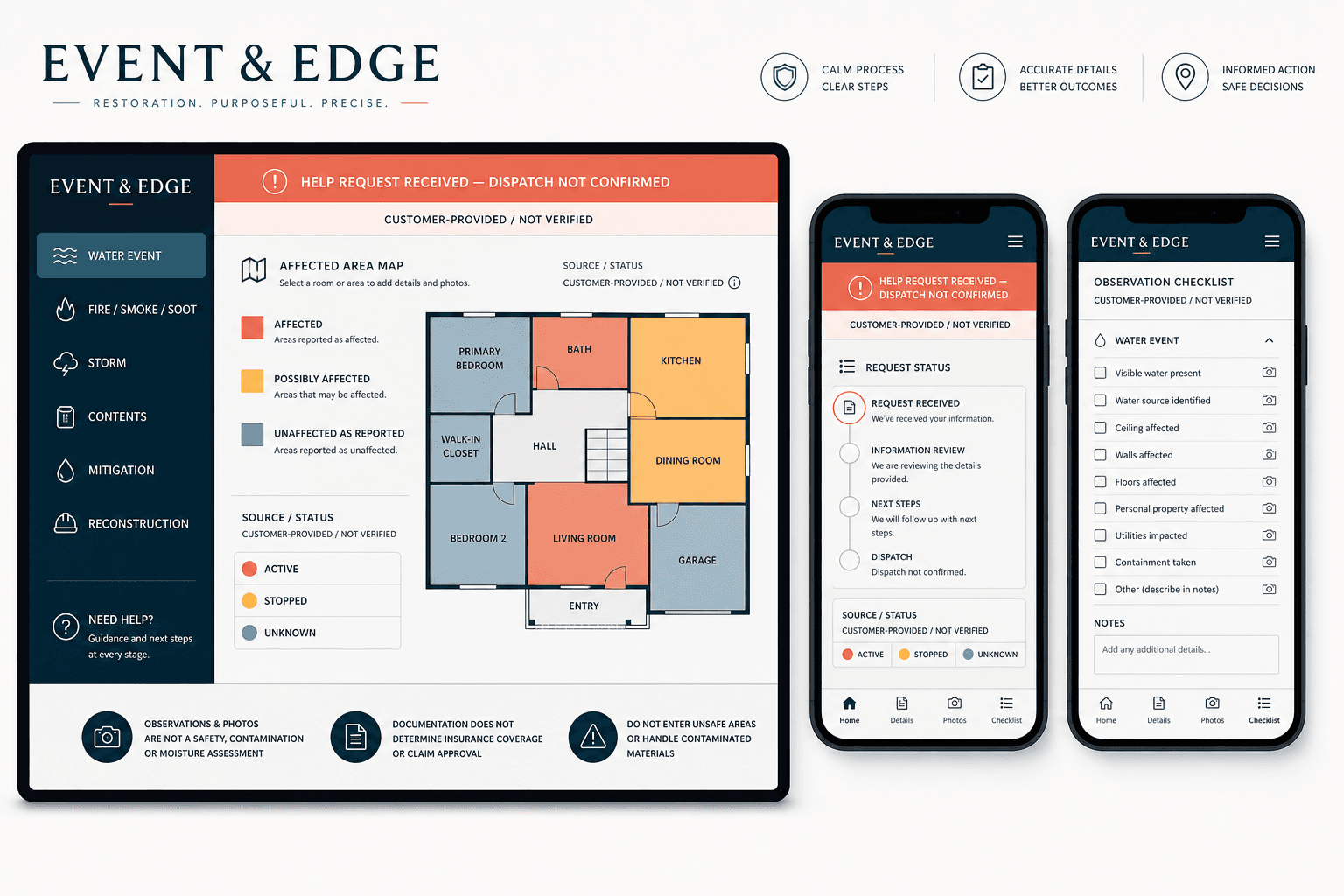
See calm crisis intake become a usable affected-area and response-status interface.
Event & Edge shows how one system can collect observations, map reported areas, surface safety and utility context, organize records, and preserve the line between request receipt, dispatch, assessment, insurance decisions, and authorized work.