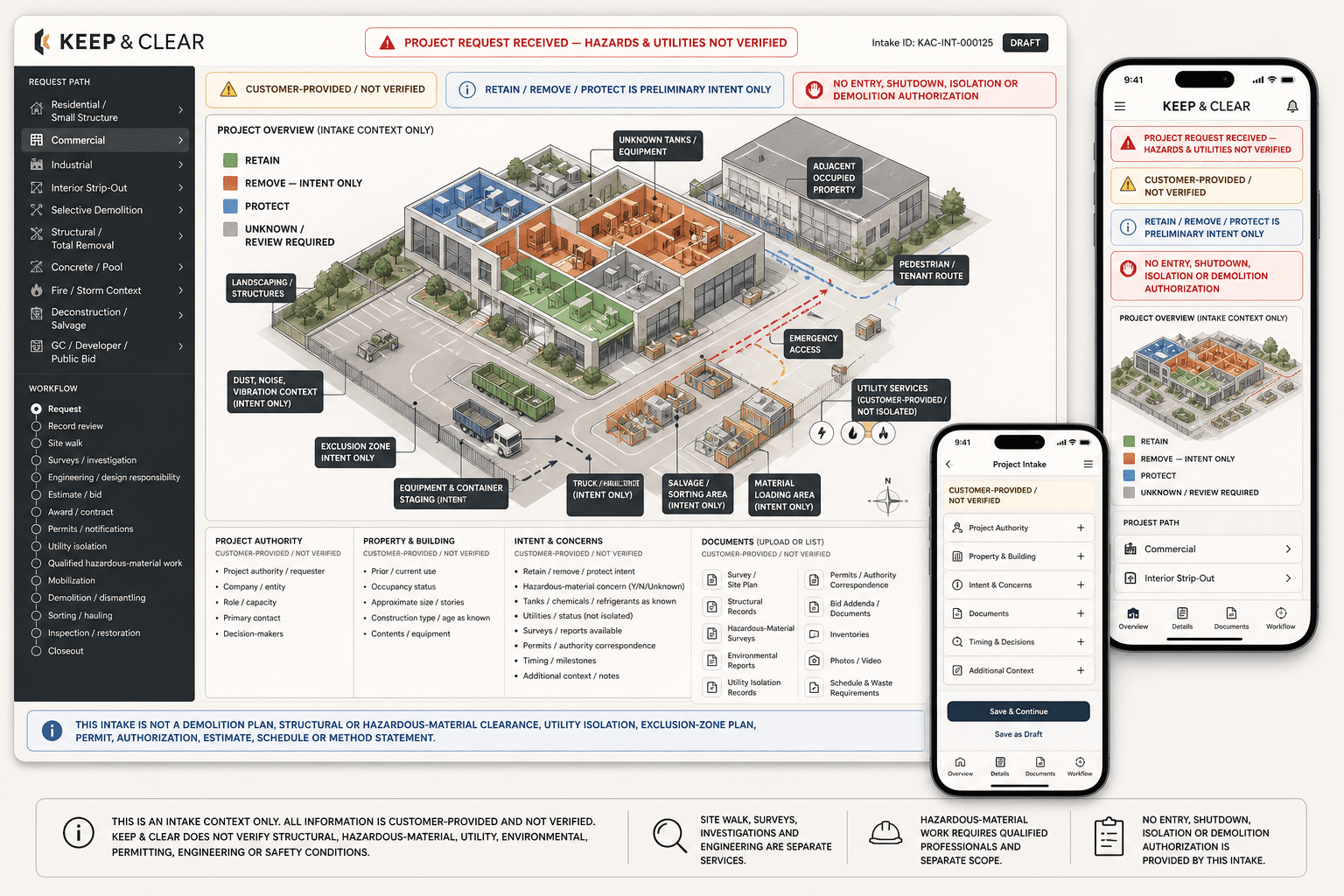
What pages should a demolition contractor website include?
Most need a focused homepage, genuine service and sector pages, accurate territory, approved projects, verified qualifications and equipment, process, bid or estimate requests, and contact details. Interior, residential, commercial, industrial, selective, concrete, pool, fire/storm, salvage, recycling, abatement, emergency, financing, and location pages should exist only when supported.
How should demolition projects be presented online?
Organize approved work by structure and prior use, buyer, project type, company role, retained and removed scope, protection, site constraints, equipment, material streams, records, and truthful status. Do not present stock imagery, implausible scale, regulated-material work, or unrelated projects as proof.
Can photos produce an instant demolition quote?
Photos can help route a request, but scope may depend on ownership, occupancy, structure, contents, utilities, hazardous or regulated materials, environmental conditions, engineering, adjacent properties, access, protection, salvage, waste classification, trucking, facilities, permits, notifications, traffic, restoration, quantities, and schedule.
Can the website confirm a building is safe or free of hazardous materials?
No. A form, photo, owner statement, or old report cannot establish current structural stability, utility isolation, hazardous-material condition, air quality, contamination, fire risk, entry safety, or legal clearance. These require the appropriate current records and qualified parties.
Will a demolition website guarantee bids or rankings?
No. It can improve technical access, service clarity, local relevance, verified proof, mobile contact, and request quality. Competition, procurement, proximity, reputation, regulation, season, capacity, disposal access, pricing, promotion, and follow-up also affect outcomes.