Single items and small pickups
Route furniture, appliances, mattresses, electronics, yard material, and other supported items by count, size, location, access, condition, and handling constraints.
Volume · access · accepted material · confirmation
Turn a cluttered request into useful pickup context—without treating a photo, form submission, or estimate range as a confirmed job.
Start Your WebsiteFirst-screen questions
Route furniture, appliances, mattresses, electronics, yard material, and other supported items by count, size, location, access, condition, and handling constraints.
Separate garage, basement, attic, estate, foreclosure, tenant, renovation, and whole-property work by scope, decision-maker, occupied status, stairs, parking, and timeline.
Give property managers, real estate teams, offices, retail, storage, construction, and recurring accounts a path for sites, access windows, approvals, documentation, and billing requirements.
Explain the company’s actual sorting, donation, recycling, transfer, disposal, restricted-material, documentation, and destination practices without vague environmental claims.
Use approved before-and-after sets with service type, scope, access, company role, handling, and outcome. Do not present stock or concept imagery as completed work.
Publish only locations the company serves, with truthful travel, minimum, building-access, disposal, scheduling, and capacity limits.
Show trucks, trailers, containers, tools, crew practices, specialty handling, demolition, hauling, and material categories only when current and accurate.
State what the request can establish, what must be reviewed on site, what may change price, and when scope, price, arrival window, and booking become confirmed.
The customer provides location, material, approximate volume, access, photos, timing, and contact context.
The company checks territory, accepted material, access, capacity, information gaps, and the appropriate estimating method.
Questions, additional images, an on-site look, or a different service path resolve uncertainty before commitment.
Scope, estimate basis, exclusions, crew or equipment needs, arrival window, payment terms, and booking status are communicated.
The customer approves the supported scope and any required access, ownership, building, parking, or decision-maker arrangements.
The team documents changes, removal, cleanup, disposal or donation records when offered, payment, and follow-up.
Original design study
Room & Route is a fictional BLUEROCK concept. It shows a structured request for single items, home cleanouts, commercial work, and uncertain jobs without inventing a quote or confirmed pickup.
View the Room & Route Concept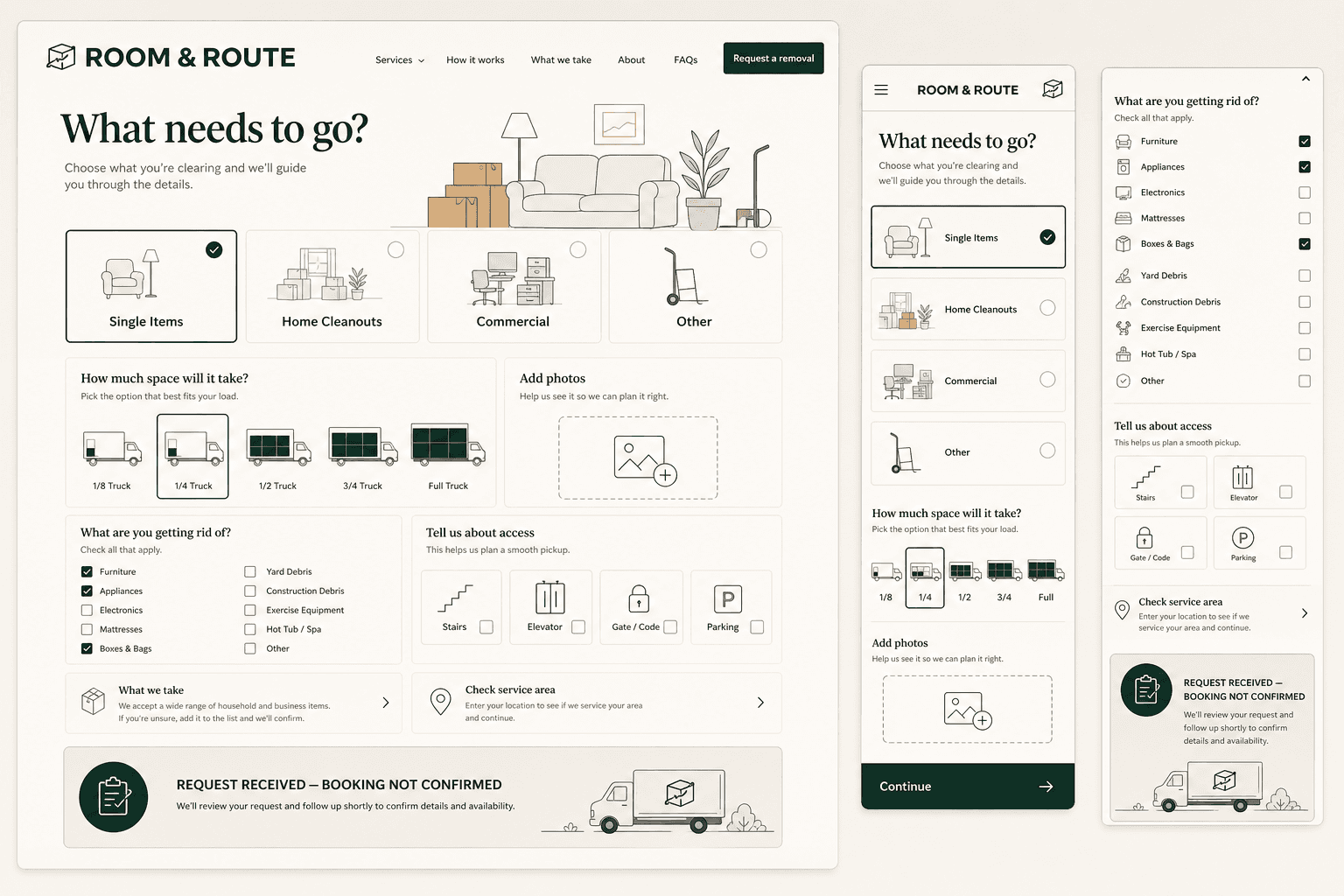
Most companies need a focused homepage, service and material pages, truthful service-area information, an estimate or booking request, company and process content, approved project evidence, accepted and restricted item guidance, and contact details. Commercial, estate, demolition, dumpster, donation, recycling, or location pages should exist only when the company actually supports them.
Photo upload can reduce friction and help the company understand likely volume, access, and item type. It should use an approved privacy and retention process, explain what images cannot establish, and avoid presenting an automated or preliminary response as a guaranteed final price.
It can show a verified pricing model, minimums, volume ranges, item pricing, labor or access variables, disposal fees, and examples when the company approves them. The page should also explain which conditions require review and when a quoted amount becomes binding.
Publish the company’s current accepted and restricted material policy, provide the supported next step, and route uncertain items for review. The website should not tell a customer to handle, move, open, mix, drain, or transport potentially hazardous material.
No. A strong website can improve technical access, local relevance, service clarity, mobile contact, evidence, and request quality. Competition, proximity, reputation, availability, pricing, operations, promotion, and follow-up also affect visibility and conversion.