Material-led installation
Separate hardwood, engineered wood, luxury vinyl, laminate, carpet, tile, resilient, rubber, cork, bamboo, concrete, epoxy, and other genuinely supported systems by product, setting, preparation, and customer intent.
Material · substrate · measurement · real projects
Help customers find the right material and project path, see verified installations, and prepare a useful consultation without turning rough dimensions into a final quantity or price.
Start Your WebsiteFirst-screen routing
Separate hardwood, engineered wood, luxury vinyl, laminate, carpet, tile, resilient, rubber, cork, bamboo, concrete, epoxy, and other genuinely supported systems by product, setting, preparation, and customer intent.
Route board, plank, tile, carpet, subfloor, squeak, transition, stair, damage, sanding, finishing, recoating, patching, and restoration requests by observed condition without promising an invisible repair or exact match.
Give general contractors, designers, facilities, property managers, associations, retail, hospitality, healthcare, education, offices, and other supported buyers a path for plans, specifications, schedule, access, compliance, documentation, and decision-makers.
Explain the actual relationship between product sales, showroom, samples, in-home selection, measurement, ordering, delivery, installation, warranties, returns, and manufacturer requirements.
Connect approved photos to product or material, rooms, pattern, preparation, transitions, stairs, company role, constraints, and outcome. Do not present concepts or manufacturer imagery as installed work.
Publish current licenses, insurance, certifications, training, memberships, manufacturer status, warranties, reviews, awards, years, and commercial credentials only from approved records and within their real scope.
State genuine service areas, property and project fit, residential or commercial capacity, minimums, travel, lead times, occupied-space limits, product availability, and scheduling conditions.
Customer dimensions and photos can help qualify a request, but they do not establish final quantities, waste, layout, subfloor condition, moisture, preparation, price, product availability, or installation schedule.
The customer provides project, rooms, material interest, existing floor, approximate size, access, timing, photos, location, and contact context.
The company checks service, product and territory fit, project type, capacity, information gaps, decision-makers, and the appropriate next step.
Samples, consultation, site measure, substrate review, moisture or other testing, plans, specifications, and product availability clarify the real scope.
Layout, quantities, waste, preparation, transitions, stairs, protection, schedule, assumptions, exclusions, price, warranty, and terms are documented.
The correct decision-maker approves product and scope; availability, deposit, ordering, acclimation, access, and installation timing are confirmed separately.
Delivery, preparation, installation, changes, cleanup, documentation, payment, care guidance, warranty information, and follow-up match actual operations.
Original design study
Grain & Grade is a fictional BLUEROCK concept. It helps prepare a professional site measure without presenting rough dimensions as final quantities, price, product availability, or a confirmed appointment.
View the Grain & Grade Concept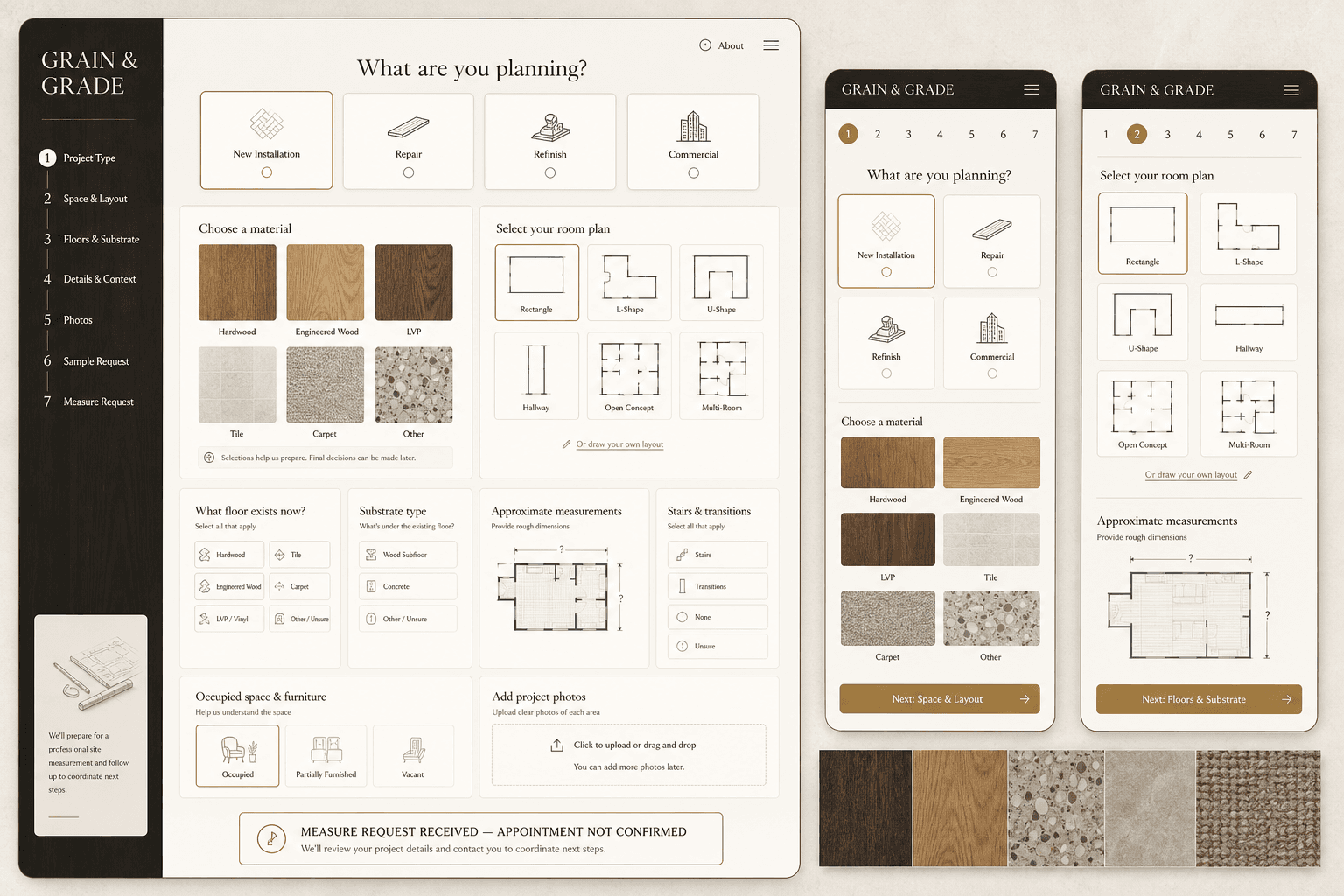
Most need a focused homepage, genuine material and service pages, truthful service-area information, approved project portfolios, company and process content, estimate or consultation requests, and contact details. Retail, shop-at-home, hardwood, tile, carpet, LVP, refinishing, epoxy, commercial, warranty, financing, or location pages should exist only when supported.
Organize real projects by useful dimensions such as material, room or property type, installation pattern, service, residential or commercial context, and company role. Include accurate captions and permissions. Manufacturer photography, samples, renderings, and fictional concepts must be labeled rather than presented as completed installations.
It can provide a preliminary range only when the company has an approved model and clearly defined inputs. Final quantities and price may depend on field measurement, waste, product, layout, stairs, transitions, demolition, substrate, moisture, preparation, delivery, availability, occupied conditions, taxes, and other scope.
Only materials and services the company genuinely sells, installs, repairs, or refinishes should have dedicated pages. Each useful page should explain product and project fit, available evidence, selection or estimating process, limitations, and the next step—not merely swap keywords.
No. It can improve technical access, local relevance, service and material clarity, project proof, mobile contact, and request quality. Competition, proximity, reputation, product access, capacity, pricing, promotion, season, and follow-up also affect results.