Residential interiors
Collect rooms, occupancy, furniture, access, existing conditions, desired finish, color status, timing, protection, pets, children, sensitivities, and walkthrough availability.
Project proof · surface context · estimate clarity
Show the work with honest context, separate different project paths, and prepare a walkthrough without pretending a form can inspect the surface.
Start Your WebsiteFirst-screen fit
Collect rooms, occupancy, furniture, access, existing conditions, desired finish, color status, timing, protection, pets, children, sensitivities, and walkthrough availability.
Qualify property type, stories, access, surfaces, observed peeling or damage, prior coatings, landscaping, weather and season, preparation, repairs, color decisions, and site review.
Route facilities, offices, retail, hospitality, associations, property portfolios, tenant areas, phases, operating hours, specifications, procurement, documentation, and responsible contacts.
Separate cabinets, staining, refinishing, coatings, floors, industrial, decorative, restoration, lead-safe or other genuinely supported services by process, qualification, environment, and evidence.
Connect approved images to property type, surfaces, scope, company role, preparation, products when approved, finish, constraints, and appropriate location detail.
Publish licenses, insurance, certifications, memberships, training, product relationships, warranties, years, reviews, and awards only from current approved records.
Explain actual cleaning, protection, masking, scraping, sanding, patching, repair, priming, caulking, application, cure, inspection, and cleanup without promising a universal method.
State genuine service areas, project-size fit, property limits, travel, season, crew capacity, occupied-space constraints, and schedule expectations. Avoid duplicate city pages.
The customer provides property, scope, surfaces, access, observations, color status, timing, and contact context.
The contractor checks service, territory, project fit, qualification, capacity, site-review needs, and the next step.
A qualified person verifies measurements, conditions, access, protection, preparation, scope, products, schedule, and constraints.
Scope, assumptions, inclusions, exclusions, products, price, schedule, validity, alternatives, and terms are documented appropriately.
Selections, agreement, deposit, access, notices, samples, schedule, and responsible contacts are confirmed through the real workflow.
Protection, preparation, application, changes, inspection, cleanup, documentation, payment, warranty, and follow-up match actual operations.
Original design study
Coat & Corner is a fictional BLUEROCK concept. It explores four project paths, preparation-led storytelling, contextual evidence, and a walkthrough request without presenting the design as client work.
View the Coat & Corner Concept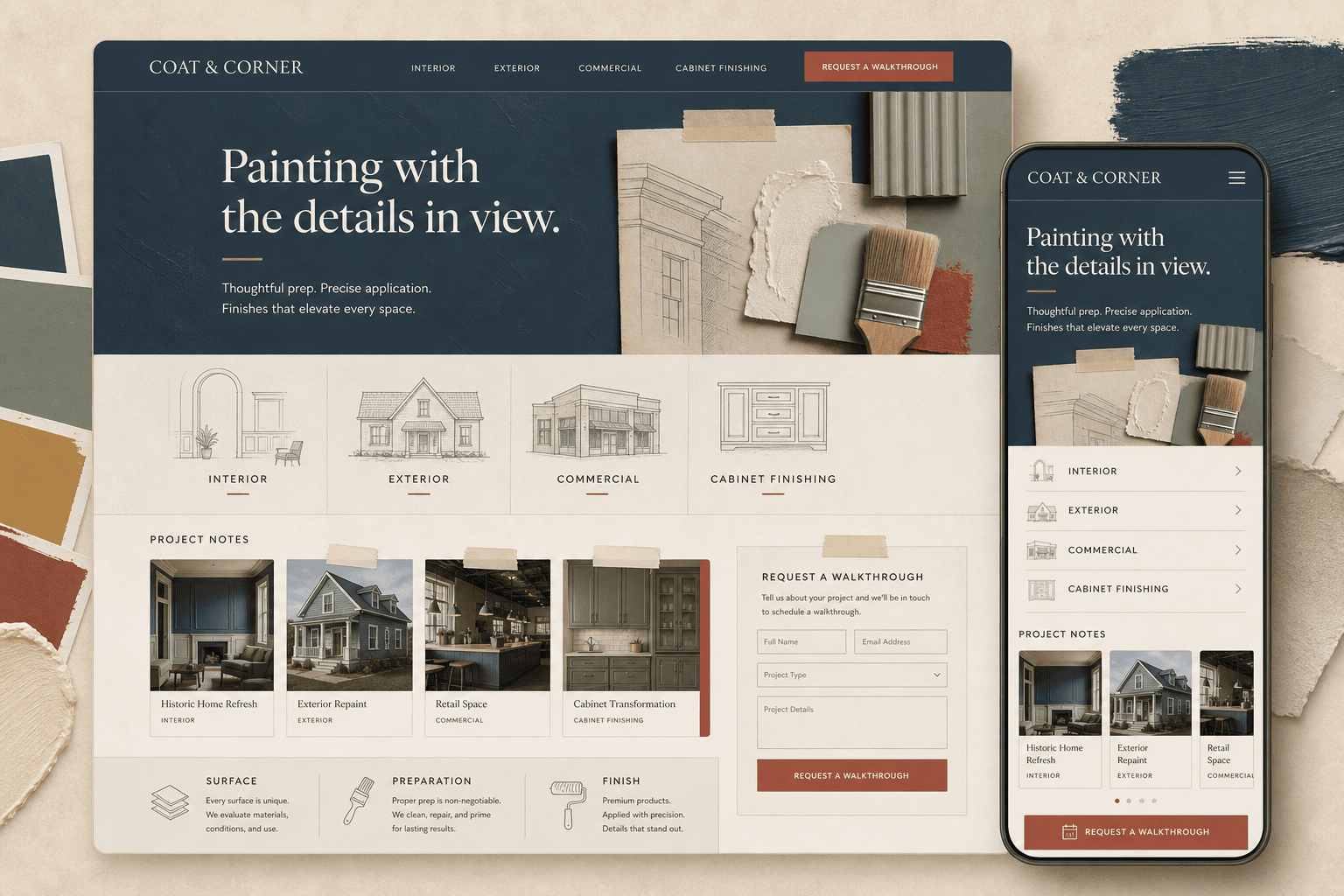
Most need a focused homepage, distinct service pages, real service-area information, about and verified trust content, approved project evidence, process, and estimate-request paths. Interior, exterior, residential, commercial, cabinet, staining, coatings, repair, color consultation, careers, or locations should be separate only when supported.
Use approved images and explain property type, surfaces, company role, scope, preparation, products when approved, finish, constraints, and outcome responsibly. Never present stock, generated, borrowed, or subcontractor work as the company’s completed project.
A range or calculator may be possible when measurements, surfaces, conditions, preparation, access, occupancy, products, repairs, options, assumptions, exclusions, taxes and fees, validity, and site-review requirements are clear. It should not be presented as a final proposal unless the operating process supports it.
The website may collect observations and publish approved educational or preparation information. It should not determine causes, substrate integrity, moisture source, hazardous materials, structural conditions, code, safety, or product suitability without the appropriate qualified process.
No. It can improve technical access, service clarity, local relevance, verified trust, project evidence, mobile contact, and request quality. Competition, proximity, reputation, seasonality, capacity, pricing, promotion, and follow-up also affect results.