Urgent vehicle concern
Collect symptoms, vehicle, location, drivability, warning indicators, towing need, and contact details while directing emergencies and unsafe conditions to the shop’s approved phone or safety process.
Service clarity · vehicle fit · useful intake
Help drivers understand whether the shop fits the vehicle and concern, then move them into a real scheduling, inspection, estimate, and authorization process.
First-screen questions
Request architecture
Collect symptoms, vehicle, location, drivability, warning indicators, towing need, and contact details while directing emergencies and unsafe conditions to the shop’s approved phone or safety process.
Route actual maintenance services by vehicle fit, mileage or manufacturer context, preferred timing, transportation needs, shop capacity, and confirmation workflow.
Let the customer describe observations and prior work without presenting an online guess as a diagnosis, inspection result, repair authorization, or final estimate.
Qualify vehicle count and type, operating schedule, locations, service needs, downtime priorities, billing or approval process, and the responsible fleet or operations contact.
Trust that can be checked
Publish current technician certifications, licenses, insurance, memberships, equipment, specialties, and affiliations only from approved records and with accurate scope.
State supported repairs, maintenance, diagnostics, makes, models, vehicle classes, parts policies, modifications, fleet work, and exclusions as the shop actually operates.
Show the genuine address, hours, entrance, parking, key drop, towing or transport process, service area, accessibility, and after-hours rules without inventing availability.
Use approved shop, team, equipment, process, and completed-work imagery. Publish reviews, warranties, prices, years, awards, and results only when verified and permitted.
Good intake helps the shop respond and route work. It does not establish safety, diagnosis, scope, parts, price, completion time, or authorization.
Request is not authorization
The customer describes the vehicle, concern, service, location, and desired timing.
The shop confirms fit, next step, arrival or towing instructions, and actual scheduling options.
A qualified person performs the supported inspection or diagnostic process.
Scope, parts, labor, taxes, fees, timing, assumptions, and options are communicated through the real system.
Work proceeds only through the shop’s documented customer-authorization and change process.
Status, additional findings, payment, warranty information, pickup, records, and follow-up match actual operations.
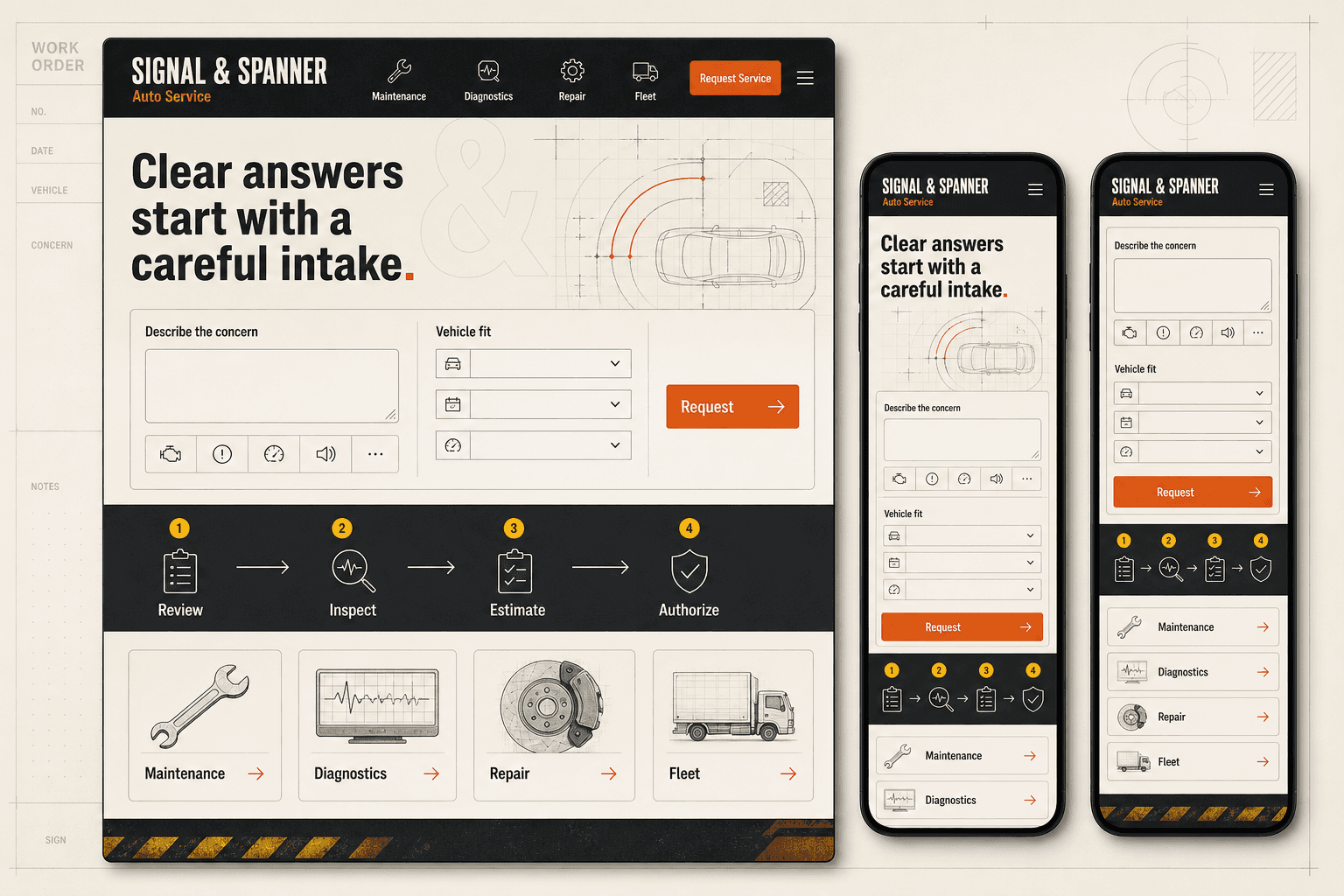
Original design study
Signal & Spanner turns vehicle fit, concern intake, inspection, estimate, and authorization into a precise responsive system. It is clearly fictional and makes no claims about a real shop.
Explore the full conceptFAQ
Most shops need a focused homepage, accurate services, supported vehicles or specialties, about and team information, verified qualifications, location and hours, appointment or contact paths, and clear policies. Fleet, tires, diagnostics, inspections, collision, diesel, performance, financing, careers, or multiple locations should be separate only when genuinely offered.
The site can collect a preferred time or connect to a supported scheduling system. It should distinguish a request from a confirmed appointment and reflect bay capacity, technician availability, vehicle and service fit, parts, towing, drop-off, cancellations, reminders, and human review.
It can collect observations and publish carefully scoped starting information. It should not turn symptoms into a diagnosis or a calculator into a final estimate unless the shop has a reliable, reviewed process covering vehicle configuration, inspection, labor, parts, taxes, fees, exclusions, validity, and authorization.
Only current, verified, approved information should be published. The site should name the issuer or source when appropriate, state the relevant scope and conditions, and avoid implying that a credential, warranty, rating, or review applies more broadly than it does.
No. It can improve technical access, service clarity, local relevance, mobile contact, trust evidence, and request quality. Competition, proximity, reputation, authority, demand, pricing, capacity, promotion, and follow-up also affect results.
Bring the real services, vehicles, location, team, qualifications, scheduling process, evidence, policies, and connected systems.
Start Your Website