The work order becomes the interface
Inspection cards, service labels, technical diagrams, and authorization stages create an original visual language without pretending that a generated vehicle or repair belongs to a customer.
Fictional concept · Design study
An original responsive direction for an independent repair shop that needs vehicle-fit clarity, responsible diagnostic intake, and an explicit authorization journey.
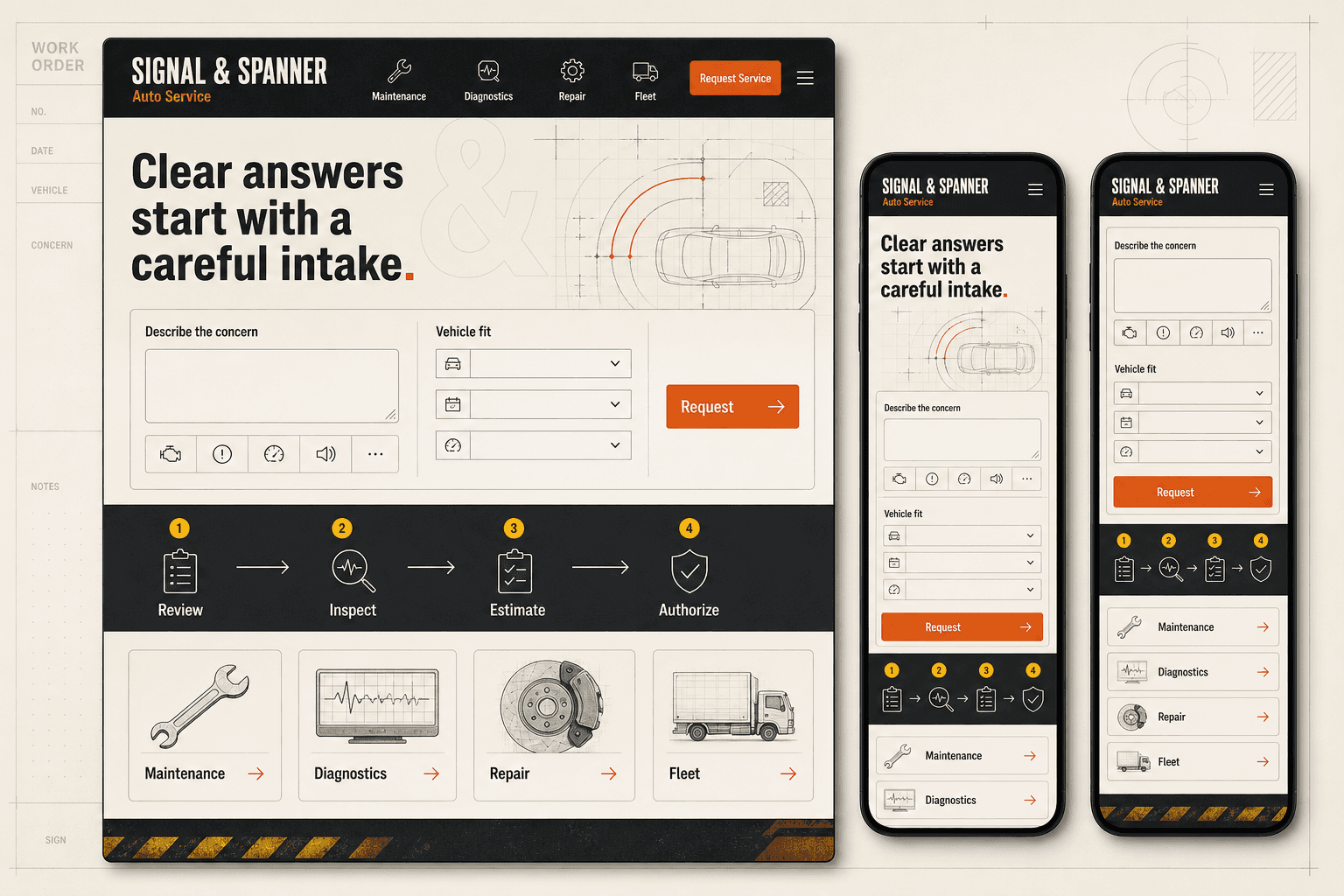
Signal & Spanner is a fictional brand created by BLUEROCK. This is not client work and contains no claims about a real shop, customer, vehicle, technician, location, service, credential, affiliation, review, price, warranty, availability, diagnosis, appointment, repair, safety decision, or result.
The design question
The concept uses work orders, inspection geometry, service labels, and process diagrams to communicate care and precision. The interface collects context but leaves inspection, diagnosis, scope, price, timing, and safety decisions to the supported shop process.
A production site would replace every implied capability, vehicle, credential, location, policy, workflow, availability, and evidence module with current approved information.
Core decisions
Inspection cards, service labels, technical diagrams, and authorization stages create an original visual language without pretending that a generated vehicle or repair belongs to a customer.
The concept asks what the vehicle is, what the customer observes, where it is, and which supported path fits before suggesting a schedule or next step.
A customer can describe warning indicators, noises, smells, leaks, timing, drivability, and prior work without the interface converting those details into an online diagnosis or safety judgment.
Request, review, inspection, estimate, customer authorization, repair, and closeout remain separate stages instead of collapsing into one misleading booking button.
Proposed architecture
Establish vehicle, service, location, and urgency fit; show verified shop evidence; and route the appropriate next step.
Explain supported routine services, vehicle context, preparation, scheduling rules, and what the appointment request does and does not confirm.
Collect observations responsibly and explain the shop’s actual inspection, testing, estimate, communication, and authorization process.
Organize genuine repair capabilities by useful customer language while preserving inspection, parts, scope, timing, and approval boundaries.
Qualify vehicle types, count, locations, operating constraints, downtime needs, billing, approvals, service levels, and responsible contacts.
Connect address, hours, arrival, parking, towing, key drop, transport, accessibility, contact, uploads, and scheduling to supported workflows.
From concept to production
The finished site should reflect supported vehicles and services, location, hours, team, qualifications, inspection process, estimates, authorization, parts, warranties, scheduling, communication, payments, records, and privacy.
See the BLUEROCK approach to service paths, verified trust, vehicle and concern intake, operational boundaries, and customer authorization.
Explore Auto Repair Web DesignBring the supported vehicles, services, location, team, qualifications, evidence, systems, scheduling, policies, and authorization rules.
Start Your Website