Local moving
Collect origin, destination, date flexibility, property and access details, approximate inventory, packing, storage, specialty items, and contact information for a real survey and capacity review.
Move details · verified trust · estimate clarity
Help people organize the right details, understand whether the mover fits, and enter a real survey, estimate, agreement, and scheduling process.
Start Your WebsiteFirst-screen fit
Collect origin, destination, date flexibility, property and access details, approximate inventory, packing, storage, specialty items, and contact information for a real survey and capacity review.
Separate interstate or regional requests by actual authority, supported lanes, survey method, inventory, timing, pickup and delivery expectations, storage, documentation, and responsible estimate process.
Qualify sites, departments, inventory, technology, files, specialty equipment, building rules, downtime, phases, vendors, decision-makers, procurement, and target dates.
Route piano, art, antiques, safes, vehicles, packing, crating, labor-only, loading, storage, disposal, or other genuine services through their specific evidence and operating requirements.
Publish licenses, registrations, authority numbers, insurance, valuation or coverage options, affiliations, and service classifications only from current approved records and with accurate scope.
Collect rooms, categories, approximate quantities, dimensions, fragile or specialty items, packing status, disassembly, storage, and photos without pretending a short form is a final inventory.
Ask about stairs, elevators, reservations, parking, loading zones, carries, entrances, gates, building certificates, restrictions, dates, and responsible contacts at both ends.
Use approved crew, vehicle, equipment, packing, storage, and completed-move imagery. Publish reviews, claims, awards, years, guarantees, and results only when verified and permitted.
The customer provides move type, places, timing, access, inventory context, services, and contact details.
The company uses its supported virtual, phone, in-home, or on-site process to understand the move.
Scope, assumptions, services, rates or price, valuation or coverage, timing, exclusions, and validity are communicated appropriately.
Required documents, disclosures, selections, terms, deposits, and customer approvals are completed through the real workflow.
Dates, windows, crew, vehicle, preparation, access, communication, changes, pickup, transport, and delivery follow confirmed operations.
Inventory reconciliation, payment, documents, storage, exceptions, damage or claims process, and follow-up match actual policy.
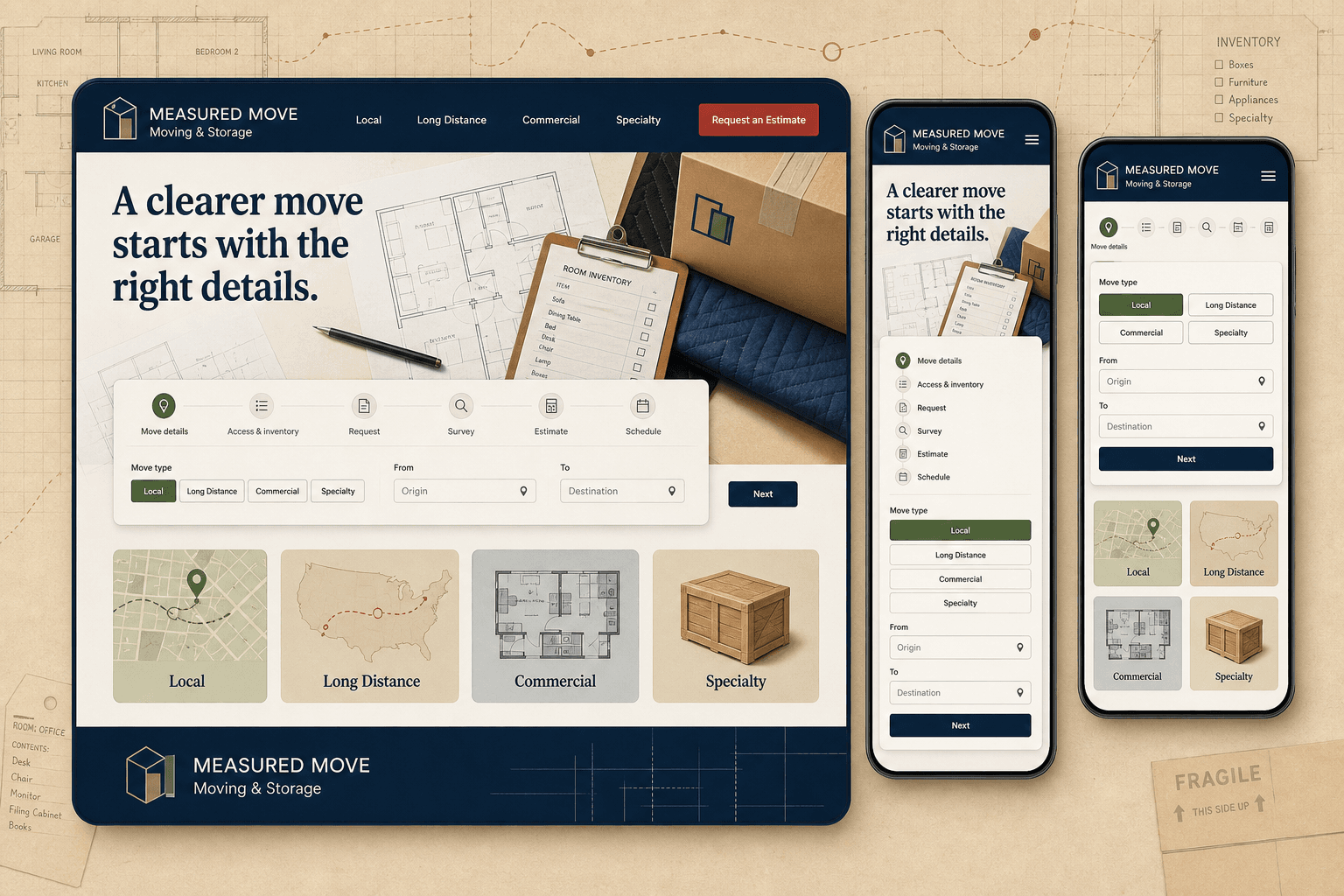
Original design study
Measured Move turns local, long-distance, commercial, and specialty intake into a calm responsive system. It is clearly fictional.
Explore the conceptMost need a focused homepage, distinct move-type pages, genuine service areas, about and verified trust information, packing or storage pages when offered, a clear process, and estimate-request paths. Local, long-distance, interstate, commercial, specialty, labor-only, storage, careers, branches, and resources should be separated only when genuinely supported.
A calculator can provide carefully scoped planning information when inputs, assumptions, inclusions, exclusions, access, inventory, services, dates, route, taxes and fees, validity, and review requirements are explicit. It should not be presented as a final or binding estimate unless the company’s lawful process supports that exact result.
The website can collect a preferred date or connect to a supported booking workflow. A move should not be shown as booked until service fit, authority, capacity, survey, estimate, agreement, required disclosures, deposit, access, and confirmation are complete.
Only current approved facts should be published, with accurate issuer, identifier, jurisdiction, service scope, limitations, selections, exclusions, claims process, and required notices. The site should not collapse different concepts into a generic licensed-and-insured badge.
No. It can improve technical access, service clarity, local relevance, verified trust, mobile contact, and estimate-request quality. Competition, proximity, reputation, authority, seasonality, capacity, pricing, promotion, and follow-up also matter.