Refrigeration
Collect refrigerator, freezer, ice-maker, wine-storage, built-in, undercounter, or other supported equipment; cooling, frost, noise, leak, display, power, door, and food-impact observations without diagnosing the cause.
Appliance fit · fee clarity · confirmed service
Help customers identify the appliance and observed problem, understand the real service process, and request an appointment without mistaking a form receipt for a confirmed visit.
Start Your WebsiteFirst-screen fit
Collect refrigerator, freezer, ice-maker, wine-storage, built-in, undercounter, or other supported equipment; cooling, frost, noise, leak, display, power, door, and food-impact observations without diagnosing the cause.
Separate washer, dryer, laundry center, dishwasher, disposal, or other supported work by observed water, drain, heat, movement, vibration, noise, odor, power, cycle, access, and property context.
Route ranges, ovens, cooktops, hoods, microwaves, warming drawers, and supported equipment by fuel or power only when known, observed behavior, controls, ventilation, installation, access, and safety context.
Qualify property managers, hospitality, food service, laundry, offices, builders, warranty administrators, and other supported accounts by equipment, locations, access, hours, procurement, documentation, and responsible contacts.
Connect approved evidence to appliance type, model context when appropriate, observed complaint, company role, diagnosis after inspection, authorized scope, parts, constraints, and outcome without exposing customer data.
Publish brands serviced, factory authorization, certifications, licenses, insurance, training, warranties, years, reviews, awards, and affiliations only from current approved records.
State genuine territory, appliance and brand coverage, residential or commercial limits, installation boundaries, hours, service-fee rules, parts process, scheduling, and capacity. Avoid duplicate city pages.
Tell visitors exactly what happens after submission. Receipt does not confirm technician availability, date, arrival window, diagnosis, fee, parts, repairability, price, authorization, warranty coverage, or completion.
The customer provides appliance, observed behavior, model context, property, access, safety, location, timing, and contact information.
The company checks appliance, brand, territory, account, access, schedule, fee, warranty or authorization context, and the appropriate next step.
The actual workflow confirms whether a call, appointment, arrival window, estimate visit, parts research, referral, or other response has been accepted.
A qualified technician evaluates the appliance, installation, symptoms, condition, controls, systems, access, safety, codes, stored errors, and supported testing.
Diagnosis, options, parts, labor, fees, assumptions, exclusions, price, timing, warranty, and terms are presented and approved appropriately.
Work, testing, documentation, payment, parts and labor warranty information, care guidance, and follow-up match actual operations.
Original design study
Circuit & Cycle is a fictional BLUEROCK concept. It separates refrigeration, laundry, cooking, and commercial work while keeping receipt, review, scheduling, and appointment confirmation distinct.
View the Circuit & Cycle Concept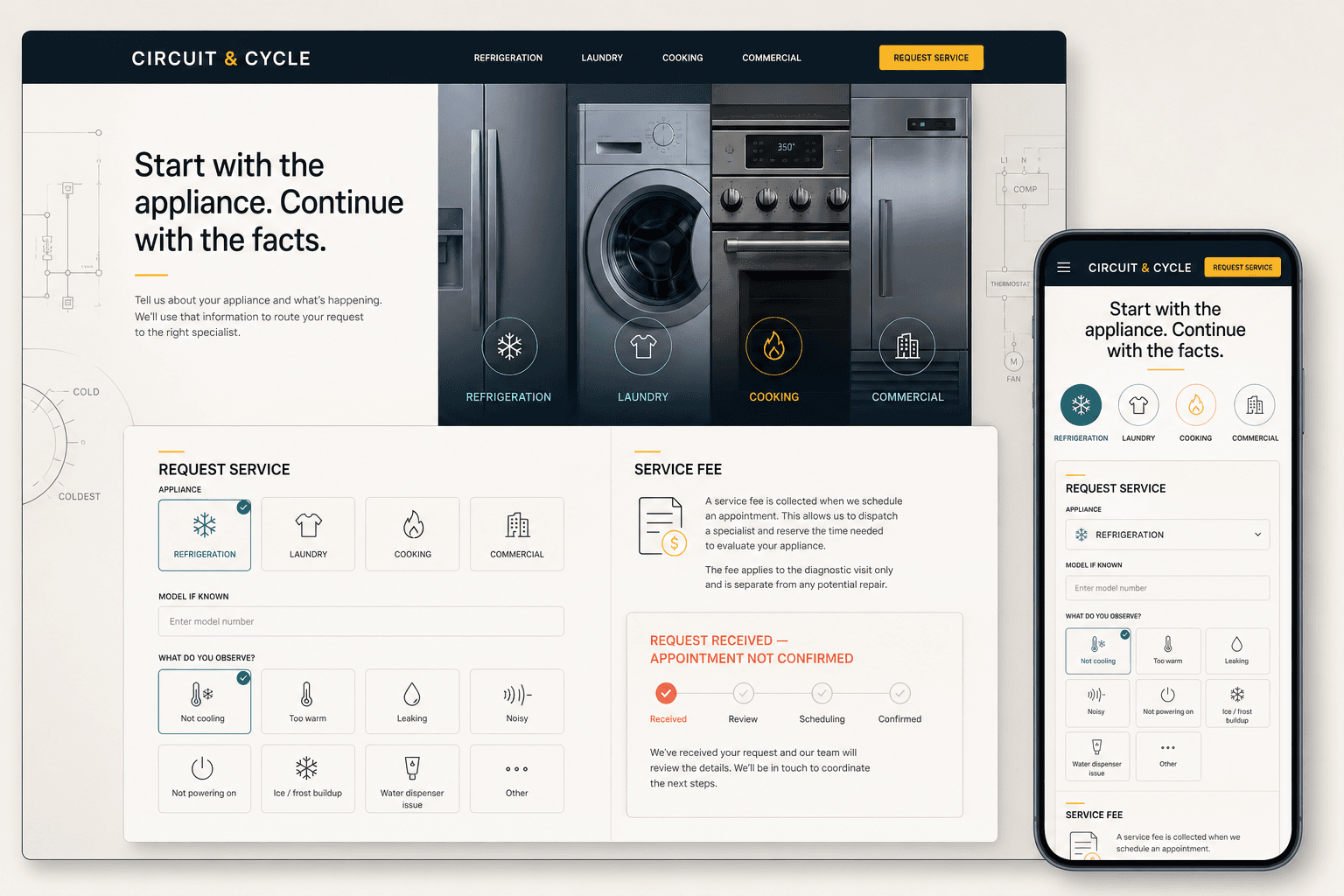
Most need a focused homepage, pages for genuinely supported appliance categories, real service-area information, verified brands and qualifications, service-fee or estimate explanation, process, approved evidence, and contact. Brand, symptom, commercial, warranty, installation, maintenance, or location pages should exist only when the company supports them and the page adds distinct value.
Only when the company actually services it and can provide useful distinct information. A repeated template with changed brand or appliance names is weaker than a smaller set of accurate pages explaining fit, exclusions, model information, common customer observations, service process, fee rules, parts, and next steps.
No. It may collect observations and publish approved safety or preparation guidance. Electrical, gas, refrigerant, water, drainage, control, mechanical, installation, food-safety, and repairability decisions belong to a qualified supported process.
If the company has a current approved fee policy, explain the amount or calculation, what it covers, when it is due, whether any portion applies to authorized work, exceptions, taxes, travel, multiple appliances, commercial terms, warranty situations, and validity. Do not invent a sample price.
No. It can improve technical access, appliance and brand clarity, local relevance, verified proof, fee transparency, mobile contact, and request quality. Competition, proximity, reputation, availability, parts, pricing, advertising, scheduling, and follow-up also affect outcomes.