What pages should a garage door company website include?
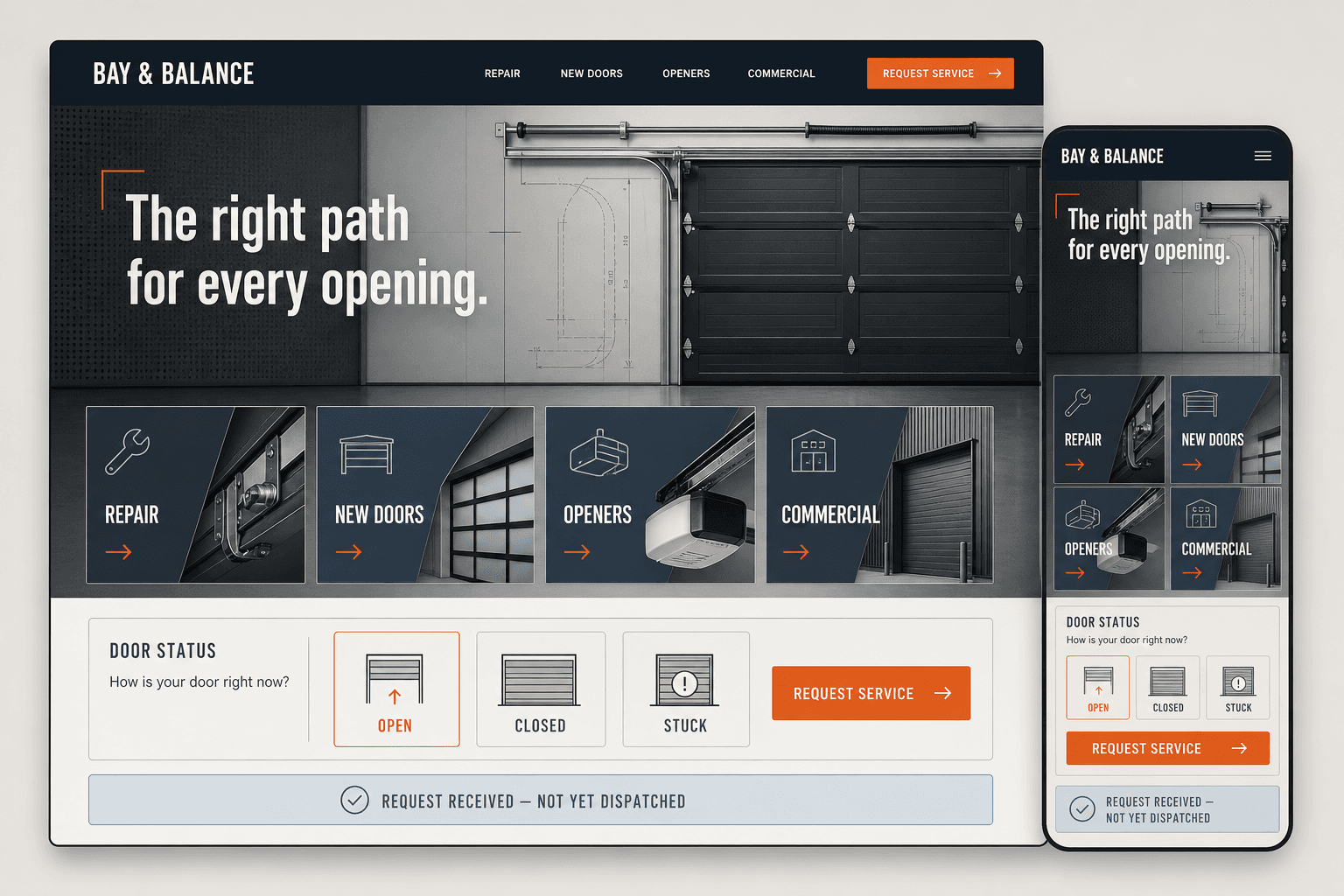
Most need a focused homepage, repair and installation paths, opener or supported specialty services, commercial information when applicable, real service areas, verified company information, approved project evidence, process, and contact. Individual repair, product, brand, maintenance, or location pages should exist only when the company genuinely supports them and the page adds useful distinct information.
Should repair and new-door installation use the same form?
Usually they need different questions. A repair visitor may need to describe the current movement, access, observed condition, safety context, and urgency. An installation visitor may need property, opening, style, material, insulation, window, opener, approval, measurement, and timing context.
Can the website diagnose a broken spring or cable?
No. It may collect observations and display approved safety guidance, including instructions not to operate or approach equipment when the company determines that is appropriate. Diagnosis, safe access, repair options, compatibility, scope, and authorization belong to a qualified on-site or otherwise supported process.
Can customers receive an instant garage door estimate?
A planning range or configured product path may be possible when measurements, equipment, condition, options, labor, access, permits, disposal, taxes, fees, assumptions, exclusions, validity, and inspection requirements are clear. It should not be presented as a final repair diagnosis or binding proposal unless the company’s real workflow supports that.
Will a new website guarantee more service calls or rankings?
No. It can improve technical access, service clarity, local relevance, verified proof, mobile contact, and request quality. Competition, proximity, reputation, seasonality, advertising, availability, pricing, dispatch, and follow-up also affect outcomes.