What pages should a tree service website include?
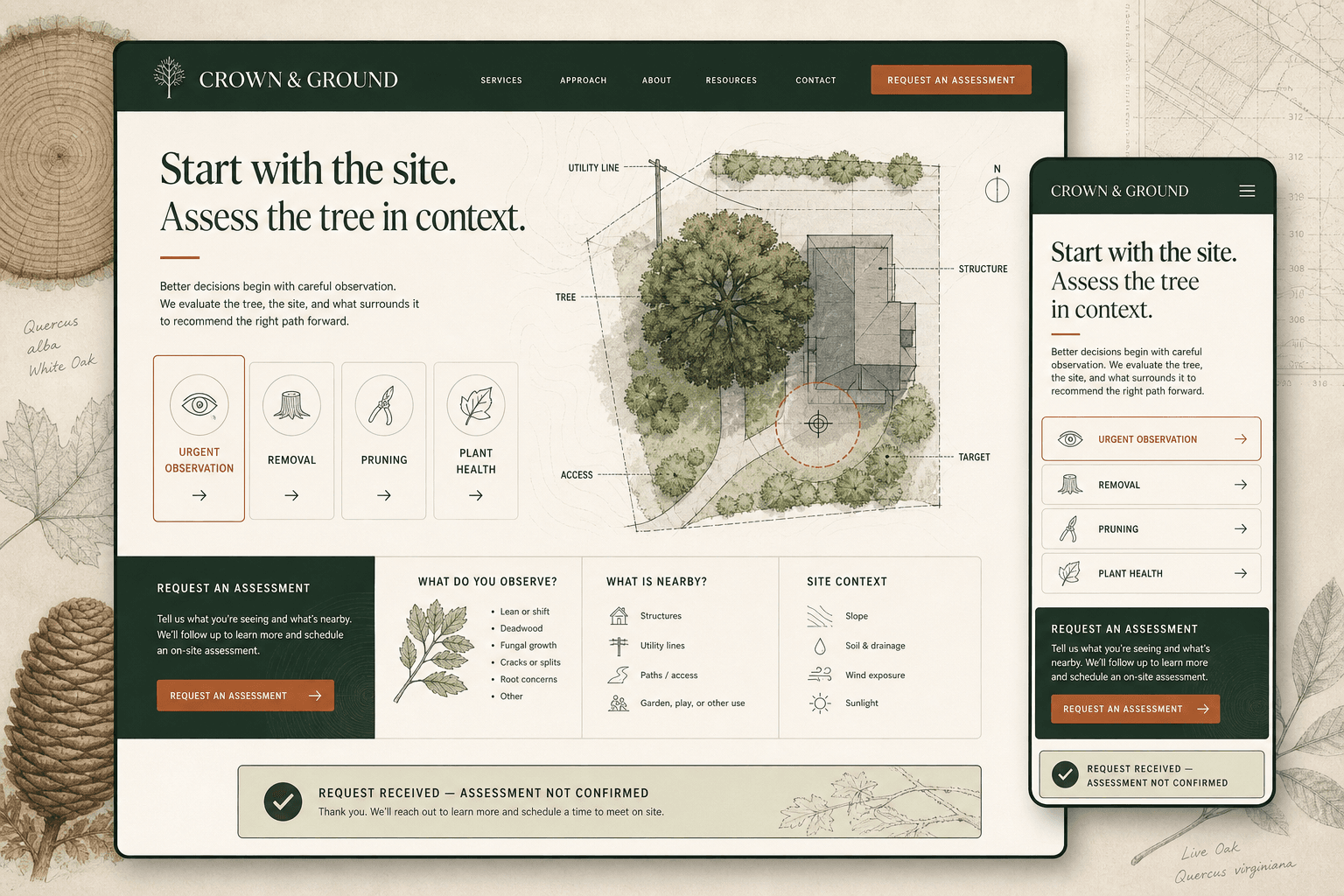
Most need a focused homepage, genuine service pages, real service-area information, verified company and credential content, approved project evidence, process, and estimate or assessment requests. Removal, pruning, stump, storm, plant health, consulting, commercial, municipal, land clearing, planting, or location pages should exist only when supported.
How should emergency tree requests work online?
The site should show the company’s verified emergency contact and availability process, collect the minimum useful observations and location context, provide approved safety language, and make confirmation explicit. A submission is not automatically a dispatch or promise of arrival.
Can photos determine whether a tree is dangerous?
No. Photos may help a qualified company review context and prioritize follow-up, but they cannot reliably establish stability, hidden defects, roots, load, targets, utilities, access, ownership, protected status, safe work method, or overall risk.
Should the website show certifications and insurance?
Yes, when current and approved. Identify the credential holder and scope accurately, avoid implying that one person’s credential covers unrelated work or every crew member, and provide appropriate verification or certificate-request information without exposing sensitive records.
Will a new tree service website guarantee estimates or rankings?
No. It can improve technical access, service clarity, local relevance, verified trust, project evidence, mobile contact, and request quality. Competition, proximity, storms, seasonality, reputation, capacity, equipment, pricing, advertising, and follow-up also affect results.