Design and build
Collect property, goals, approximate scope, site context, desired timing, design status, budget context when appropriate, and contact details for a real consultation process.
Project evidence · service fit · seasonal reality
Show what the company actually creates and maintains, then route homeowners, property teams, and project partners into a request process that fits the work.
First-screen clarity
Request architecture
Collect property, goals, approximate scope, site context, desired timing, design status, budget context when appropriate, and contact details for a real consultation process.
Separate recurring residential or commercial programs from one-time cleanup, enhancement, seasonal, lawn, horticultural, irrigation, and other actual services.
Qualify property portfolio, service locations, specifications, procurement or bid process, schedule, documentation, and the responsible property, facilities, or operations contact.
Route hardscape, planting, drainage, irrigation, lighting, snow, holiday, tree, or other real capabilities according to season, territory, capacity, and company scope.
Portfolio with evidence
Connect approved photography to a real property type, service, scope, company role, materials, season, and appropriate location precision. Never present stock or generated work as completed work.
Publish licenses, insurance, certifications, memberships, awards, manufacturer relationships, and years only from current approved records and only where relevant.
State genuine service areas and meaningful travel, property, project-size, seasonal, or route-density limits. Avoid duplicate city pages built by swapping place names.
Explain consultation, site visit, design, proposal, selections, approvals, scheduling, installation, maintenance, changes, and closeout as the company actually handles them.
The form should support routing and preparation without pretending to survey the site, design the project, diagnose conditions, establish feasibility, or create a final quote.
Site, season, and capacity
The website can collect observations but should not diagnose drainage, irrigation, grading, soil, plant health, utilities, code, engineering, safety, or site feasibility.
Publish snow, cleanup, planting, holiday, irrigation, and other seasonal services only with accurate territory, dates, triggers, capacity, contract, and response expectations.
A request form, consultation calendar, route signup, maintenance proposal, or project start date should not become a confirmed service unless the operating workflow can honor it.
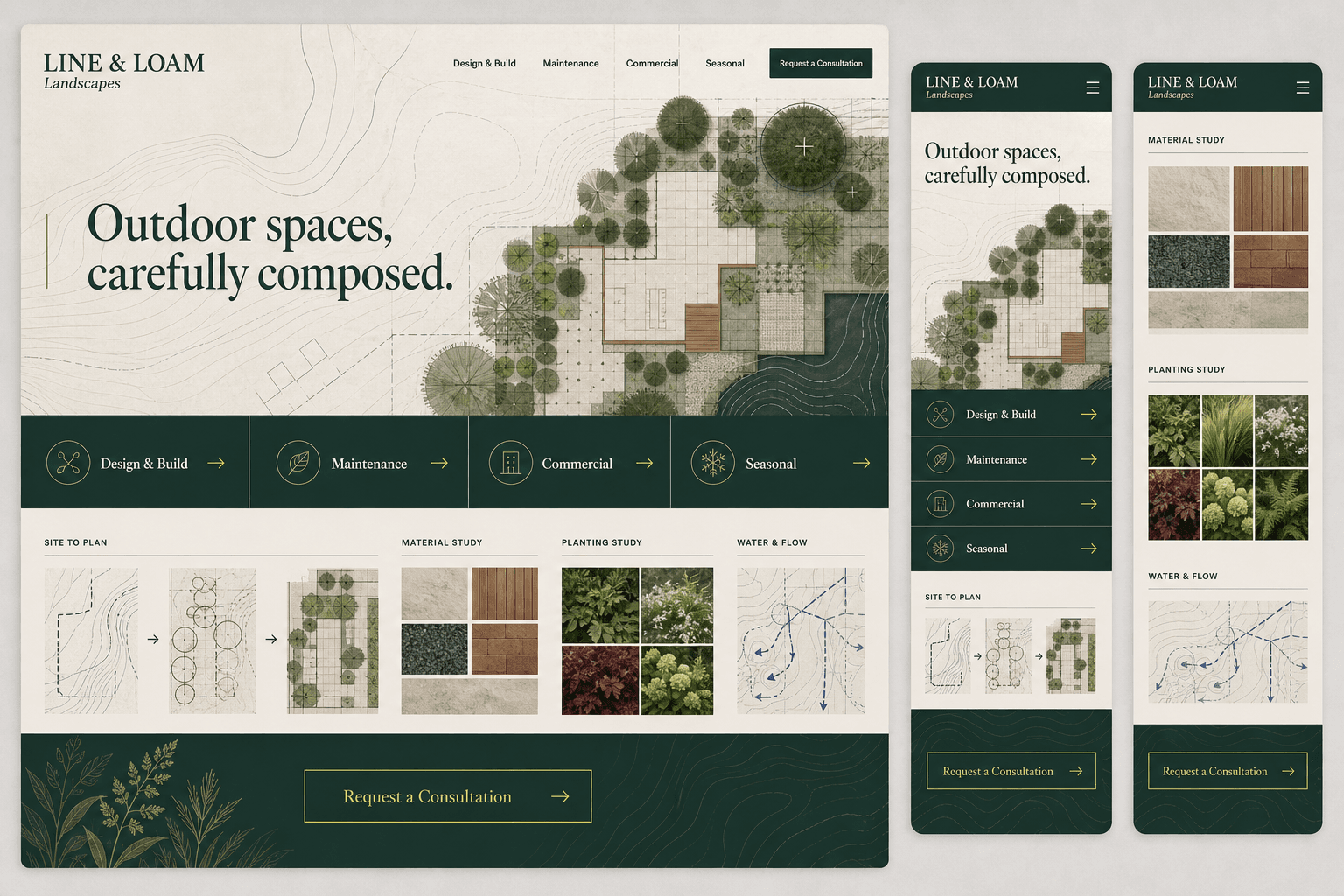
Original design study
Line & Loam separates design-build, maintenance, commercial, and seasonal paths inside a plan-led identity. It is clearly fictional and presents no generated scene as client work.
Explore the full conceptFAQ
Most need a focused homepage, distinct service pages, accurate service-area information, about or trust content, verified qualifications, approved project evidence, and clear request paths. Design-build, maintenance, commercial, hardscape, irrigation, lighting, drainage, snow, careers, locations, and resources should be separated only when genuinely supported.
Yes when approved project information can explain property type, goals, company role, scope, materials, constraints, process, and outcome responsibly. A gallery of unexplained images is less useful to visitors and search systems than contextual evidence.
A starting range or structured estimator may be possible when its inputs, units, assumptions, exclusions, territory, material and labor variability, site-review requirements, validity, and human-review process are clear. It should not be presented as a final proposal, accepted scope, or guaranteed project price unless the operation supports that result.
A request or booking flow can be scoped when services, territory, route density, crew capacity, duration, seasonality, recurring schedules, confirmations, cancellations, weather handling, and fallback are defined. The site should not confirm work the company has not reviewed and accepted.
No. It can improve service clarity, technical access, local relevance, mobile contact, project proof, and request qualification. Competition, proximity, reputation, authority, seasonality, weather, capacity, pricing, promotion, and follow-up also affect results.
Bring the real services, properties, territory, seasonality, qualifications, project evidence, process, and request rules.
Start Your Website