Residential request
Collect property type, observed signs, affected areas, timing, occupants, pets, access, prior service, and contact details without identifying an organism or prescribing treatment online.
Property context · verified trust · responsible intake
Help people describe what they observed, understand whether the company fits the property and service, and enter a real review, inspection, plan, and service process.
First-screen questions
Request architecture
Collect property type, observed signs, affected areas, timing, occupants, pets, access, prior service, and contact details without identifying an organism or prescribing treatment online.
Qualify facility type, locations, operating hours, sensitive areas, documentation, procurement, compliance needs, access, service expectations, and responsible contacts.
Explain the real inspection and service cadence, covered scope, monitoring, communication, exclusions, renewals, cancellations, pricing structure, and seasonal or capacity limits.
Separate wildlife, termite, mosquito, bed bug, exclusion, fumigation, agricultural, or other supported work by licensing, territory, inspection, equipment, method, and referral boundaries.
Confidence without fear
Publish licenses, certifications, insurance, memberships, technician credentials, product or manufacturer relationships, and regulatory statements only from current approved records.
Use responsible pest and sign information to help a visitor describe what they noticed. Do not turn images or a quiz into a definitive identification, health conclusion, or treatment recommendation.
State genuine branch, technician, travel, property, organism, seasonal, regulatory, and capacity limits. Avoid city pages created only by replacing the place name.
Explain actual inspection, integrated pest management, exclusion, monitoring, treatment, preparation, follow-up, documentation, and warranty processes with approved limitations.
The intake should help route and prepare a response. It should not identify an organism, establish a cause, assess health or structural risk, prescribe a method, or promise a result.
From observation to service
The customer provides observations, property context, location, access, occupants, pets, prior service, and preferred timing.
The company checks service, territory, licensing, urgency, capacity, preparation, and the appropriate next step.
A qualified person evaluates the supported property and condition through the company’s real inspection process.
Findings, options, scope, methods, products, preparation, safety information, price, schedule, and limitations are communicated appropriately.
Work begins only after the required agreement, consent, notices, preparation, access, and scheduling are complete.
Records, observations, recommendations, monitoring, callbacks, warranties, recurring visits, and escalation match actual policy.
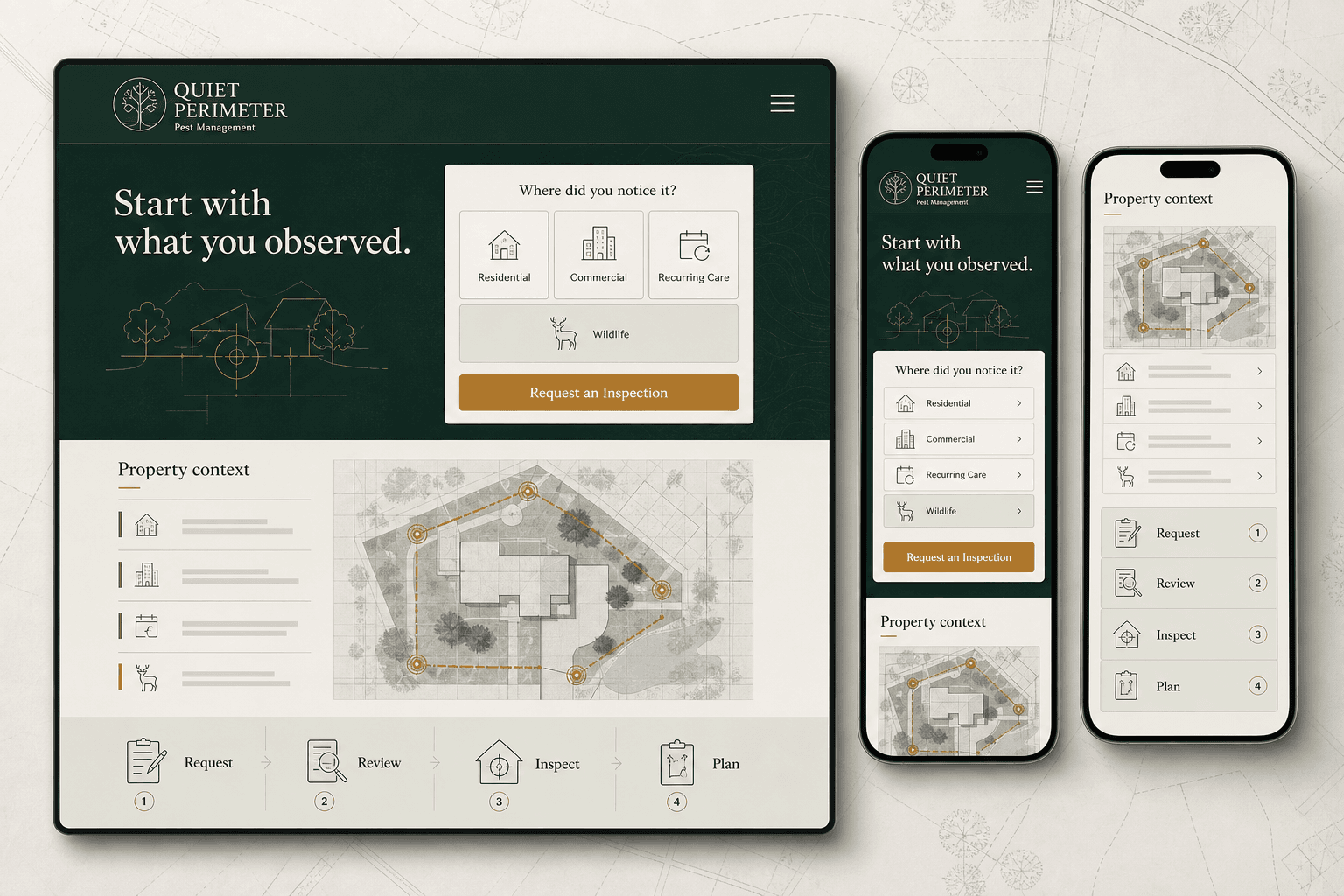
Original design study
Quiet Perimeter uses site plans, inspection zones, and field notes to organize residential, commercial, recurring, and wildlife requests. It is clearly fictional and makes no claims about a real provider.
Explore the full conceptFAQ
Most need a focused homepage, accurate pest or service pages, residential and commercial paths, verified qualifications, real territory, process and preparation information, about content, and clear inspection or contact requests. Recurring plans, wildlife, termite, mosquito, bed bug, fumigation, industries, branches, careers, or resources should be separate only when genuinely supported.
A guide may help visitors describe observable traits and signs, but images and quizzes can be incomplete or misleading. The website should preserve uncertainty, avoid health or structural conclusions, and explain when professional inspection or another qualified resource is needed.
A request or supported scheduling connection is possible when service fit, territory, licensing, technician capacity, inspection requirements, occupants, pets, preparation, access, timing, cancellations, confirmation, and fallback are defined. A requested slot should not be shown as confirmed unless the operating system can honor it.
Only approved, service-specific information should be published. Product, label, regulatory, occupant, pet, preparation, application, notification, ventilation, re-entry, disposal, and emergency instructions must come from the company’s qualified process and applicable authoritative materials—not generic AI copy.
No. It can improve technical access, service clarity, local relevance, verified trust, mobile contact, and request quality. Competition, proximity, reputation, authority, seasonality, weather, pricing, capacity, promotion, and follow-up also affect results.
Bring the real services, organisms, properties, territory, qualifications, methods, safety process, evidence, plans, and scheduling rules.
Start Your Website