Route by masonry intent
New masonry, repair, repointing, chimney, retaining, cleaning, restoration, historic, and commercial requests begin with different evidence.
Fictional concept · Design study
An original responsive assessment-request direction that organizes elevation observations, preliminary material and water context, interfaces, access, documents, and professional roles before an assessment.
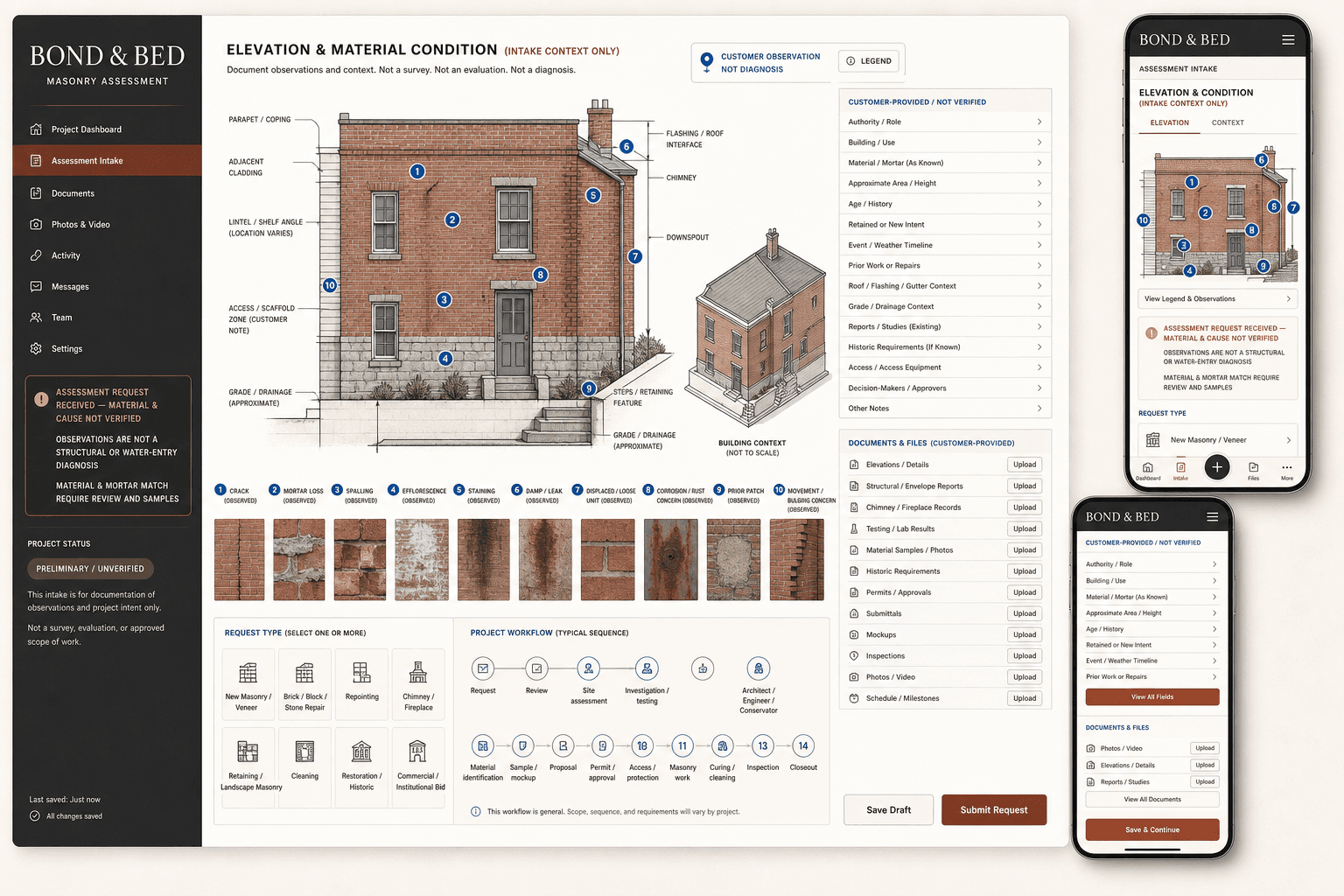
Bond & Bed is a fictional brand created by BLUEROCK. This is not client work. The company, requester, building, elevation, materials, mortar, observations, water context, interfaces, dimensions, access, records, samples, interface, and states are illustrative. Nothing shown establishes a measured survey, material identification, compatibility, condition, movement or water cause, structural/envelope/chimney diagnosis, repair design, historic approval, specification, match, quantity, price, appointment, completed work, license, insurance, warranty, guarantee, or business outcome.
Design question
The concept makes location, materials as known, weather and water context, interfaces, access, evidence, and roles legible while reserving investigation, design, samples, approvals, pricing, and field work for responsible workflows.
New masonry, repair, repointing, chimney, retaining, cleaning, restoration, historic, and commercial requests begin with different evidence.
Cracks, mortar loss, spalling, staining, efflorescence, dampness, displaced units, corrosion concern, prior patches, and movement concern gain location without becoming a diagnosis.
Roof, flashing, gutter, downspout, grade, drainage, openings, cladding, foundation, steps, retaining features, and event timing are visible as context—not proof of source or cause.
Customer descriptions and images do not establish brick, stone, mortar, compatibility, structural significance, historic approval, repair design, or a perfect match; review and samples remain separate.
Elevations, reports, chimney records, testing, samples, historic requirements, permits, submittals, mockups, inspections, photos, and schedule support the appropriate contractor and professional review.
Interaction architecture
Identify new work, repair, repointing, chimney, retaining, cleaning, restoration, historic, commercial, or another supported path.
Pin visible conditions and add material, age, weather/event, prior-work, water-interface, access, retained/new, and building context as customer-provided information.
Upload drawings, structural/envelope/chimney records, tests, samples, historic requirements, permits, submittals, mockups, inspections, photos, video, and schedule.
Confirm receipt without manufacturing material identification, cause, structural or water diagnosis, professional approval, repair design, match, price, or appointment.
Assessment, investigation, professional roles, identification, samples, mockups, proposal, permits, access, protection, masonry work, curing, cleaning, inspection, and closeout remain separate.
From concept to production
A production site should reflect actual services, materials, territory, qualifications, assessment methods, professional relationships, access systems, sampling, matching, protection, weather limits, masonry practices, cleaning, curing, inspection, warranties, and approved projects.
See the BLUEROCK approach to real material context, useful observations, responsible assessment, qualified roles, and honest scope.
Explore Masonry Contractor Web Design