Recurring maintenance
Qualify pool and property type, location, frequency, access, equipment, current provider, desired scope, communication, and real route availability.
Route fit · pool context · operational clarity
Separate recurring care, repair, seasonal work, and projects—then route each customer according to the pool, property, location, timing, and real company capacity.
First-screen fit
Qualify pool and property type, location, frequency, access, equipment, current provider, desired scope, communication, and real route availability.
Collect equipment type, observed symptoms, timing, access, prior work, photos, and urgency without diagnosing the system or promising parts, price, or completion.
Separate opening, closing, cleanup, winterization, startup, storm, freeze, and other actual work by climate, date, territory, capacity, and preparation.
Qualify resurfacing, tile, coping, decking, equipment upgrades, automation, lighting, or other supported work by scope, property, plans, timing, budget context, and consultation process.
Publish real coverage and route-density rules instead of duplicate city pages or universal availability.
Use current approved licenses, insurance, certifications, memberships, manufacturer relationships, reviews, warranties, and team information.
Let customers report clarity, color, odor, surface, leaks, noises, equipment, and recent events without declaring chemistry, safety, cause, or treatment.
Connect approved projects to real scope, pool type, company role, materials, equipment, constraints, and appropriate location precision.
Intake supports routing. It does not establish chemistry, safety, cause, scope, price, route acceptance, or completion.
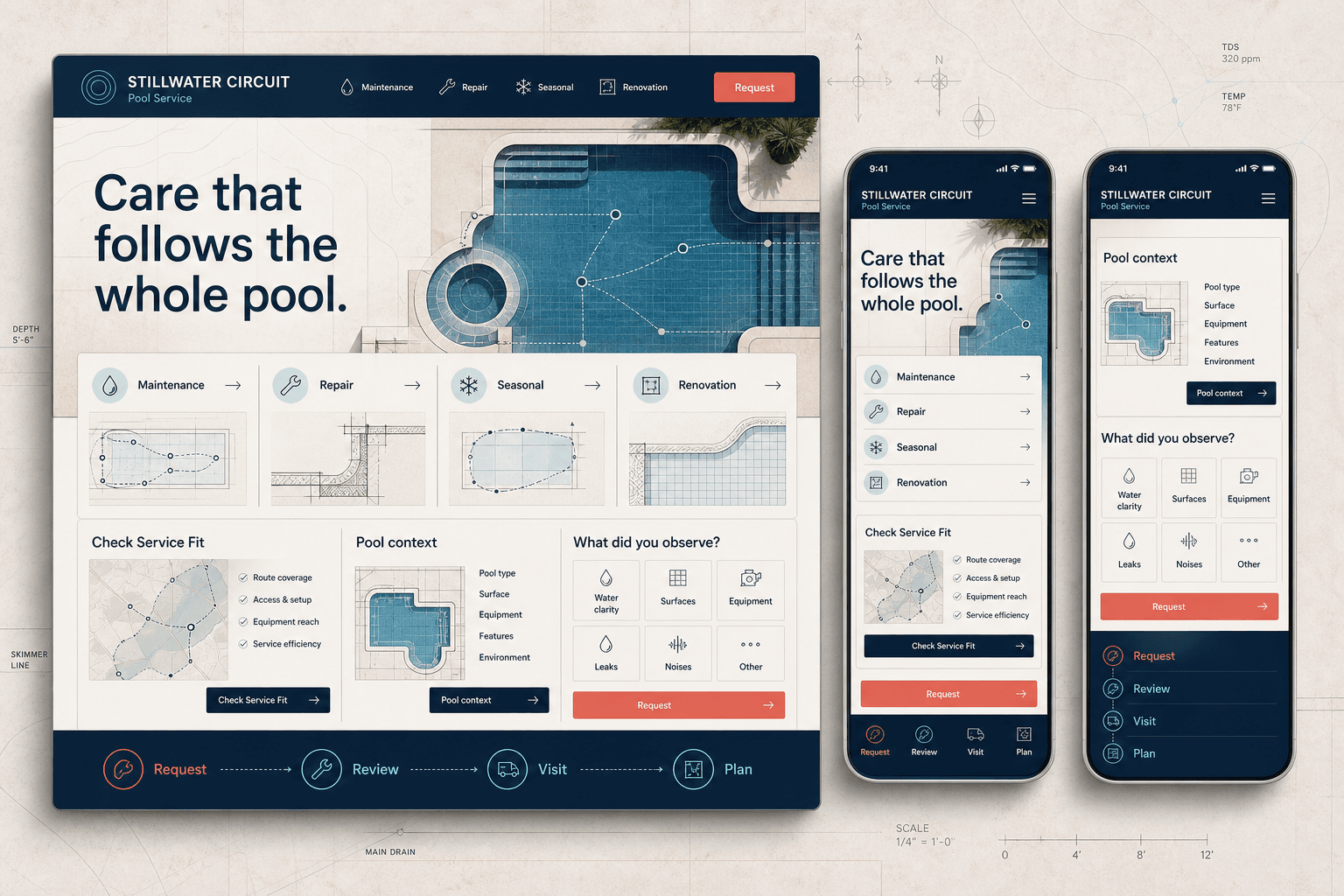
Original design study
Stillwater Circuit organizes maintenance, repair, seasonal, and renovation paths without presenting generated work as a client project.
Explore the conceptMost need a focused homepage, distinct maintenance and repair pages, genuine coverage, verified qualifications, approved project evidence, process, and clear request paths. Seasonal service, renovation, construction, commercial work, plans, equipment, careers, or multiple branches should be separate only when supported.
The site can collect route-fit information or connect to a supported enrollment system. It should reflect territory, route density, pool and property fit, access, frequency, capacity, pricing, agreements, confirmation, start dates, cancellations, and fallback before presenting service as active.
No generic website form should make that determination. It can collect observations and publish approved preparation or educational information, but testing, interpretation, treatment, equipment diagnosis, chemical handling, and swimming decisions belong to the company’s qualified process and authoritative instructions.
No. It can improve technical access, service clarity, local relevance, mobile contact, verified evidence, and request quality. Competition, proximity, reputation, seasonality, weather, route capacity, pricing, promotion, and follow-up also matter.